Platform
 Grid-Edge DERMS
 Customer Engagement
 Demand Forecasting
 BYOD
BYOD Customer Engagement
 Demand Response
 EV Charging
 Incentive Processing
 Program Design
 Program Management Automation
 Localized Dispatch
 Virtual Power Plants
 API Integrations
 C&I
C&I
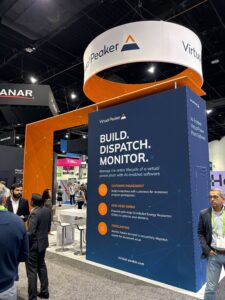
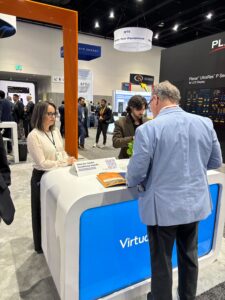
Last week, the Virtual Peaker team traveled to San Diego for DTECH 2026. We were there to help connect utilities to the next-generation of virtual power plants (VPPs) and demand flexibility initiatives needed to meet rapidly rising demand. Here are a few key takeaways from DTECH 2026:
- ROI of Load Shifting: Moving DERs into the operations room is the new standard for cost-efficiency.
- AI Integration: Utilities are shifting from AI experimentation to embedded grid tools.
- Load Growth: Managing massive data center demand requires dynamic, scenario-driven planning.
- Affordability & Reliability: Transitioning from capital-heavy grid hardening to DER-driven resource management and incorporating distributed energy resources (DERs) directly into the reliability equation, utilities can address equity and aging assets more affordably.
Walking the floor at DTECH, we learned so much more! Read on to learn the five most urgent priorities we heard in our conversations.
1. The True ROI of Load Shifting: Moving DERs to the Ops Room
 At DTECH 2026, the conversation shifted from whether we should use distributed energy resources (DERs) to how we maximize their value. The industry consensus is clear: the true ROI of load shifting is only realized when both front-of-meter and behind-the-meter DERs are integrated through a distributed energy resource management system (DERMS) directly into the operations room.
By moving DER management from “innovation pilots” to “mission-critical operations,” utilities can achieve real-time grid balancing. This transition allows for:
- Reduced Peaker Plant Reliance: Automated load shifting lowers the need for expensive, high-carbon backup generation.
- Operational Visibility: Bringing DERs into the OT (Operational Technology) environment provides dispatchers with a unified view of the grid’s “hidden” capacity.
2. AI as a Practical Tool for Utilities
AI is no longer merely a buzzword, but a functional utility tool. At DTECH 2026, the focus has moved toward embedded AI for predictive maintenance and outage response. Rather than standalone chatbots, utilities are looking for AI that can:
- Predict Equipment Failure: Analyzing device data to prevent outages before they happen.
- Automate Intelligent Dispatch: Using machine learning to optimize the flow of power across complex, bi-directional feeders.
3. Managing Explosive Data Center Load Growth
Data center demand is the defining challenge of 2026. With some forecasts suggesting data centers could account for 9% of total peak load by 2030, utilities are rethinking capacity planning.
The strategy heard most often at the Virtual Peaker DTECH 2026 booth? Dynamic planning. Static, long-range forecasts are being replaced by scenario-driven models that account for hyperscale AI “factories” coming online in months, not years. Managing this requires a “flexibility-first” approach, where large-load customers are incentivized to participate in demand flexibility programs like demand response or virtual power plants from day one.
4. Navigating a Volatile Political Environment
The utility sector is operating in a “quickly evolving” political landscape. Between federal policy shifts and new state-level mandates, the 2026 regulatory environment demands agility.
Utilities are increasingly focused on:
- Interconnection Reform: Specifically, making it faster and cheaper to plug DERs into the grid, streamlining the permitting process for new transmission to keep pace with demand.
- Policy Resilience: Building infrastructure plans that can withstand shifting administrations and changing environmental targets.
5. Solving the Affordability-Reliability Paradox with DERs
The “affordability squeeze” is hitting ratepayers harder than ever, yet the demand for 24/7 reliability has never been higher. At DTECH 2026, the consensus was that DERs are the primary lever for balancing these competing pressures. Instead of traditional, capital-intensive “grid hardening”—which often leads to significant rate hikes—utilities are increasingly incorporating DERs as non-wires alternatives (NWAs). By integrating customer-sited resources into their resource planning, utilities can:
- Avoid Costly Infrastructure Overbuild: Using local solar, battery storage, and demand response to shave peak loads allows utilities to defer or cancel expensive substation and feeder upgrades.
- Enhance Hyper-Local Reliability: In high-risk areas (like wildfire or storm zones), DER-powered microgrids provide a “resiliency insurance policy” that keeps the lights on even when the main grid is compromised.
- Targeted Ratepayer Relief: Leveraging DERs reduces the need for system-wide investments, ensuring that every dollar spent on the grid directly addresses the most critical reliability gaps without unnecessarily driving up monthly bills.
By treating DERs as a dispatchable resource rather than a passive load, utilities are finding they don’t have to choose between a reliable grid and an affordable one.
DTECH 2026 Recap: What’s Next for Your Grid?
The insights from DTECH 2026 make one thing certain: the “stable” load curve of the past is gone. Success now depends on how quickly you can turn data into action.
Looking To Learn More? Join Virtual Peaker At One Of These Energy Industry Conferences in 2026.