Platform
 Grid-Edge DERMS
 Customer Engagement
 Demand Forecasting
 BYOD
BYOD Customer Engagement
 Demand Response
 EV Charging
 Incentive Processing
 Program Design
 Program Management Automation
 Localized Dispatch
 Virtual Power Plants
 API Integrations
 C&I
C&I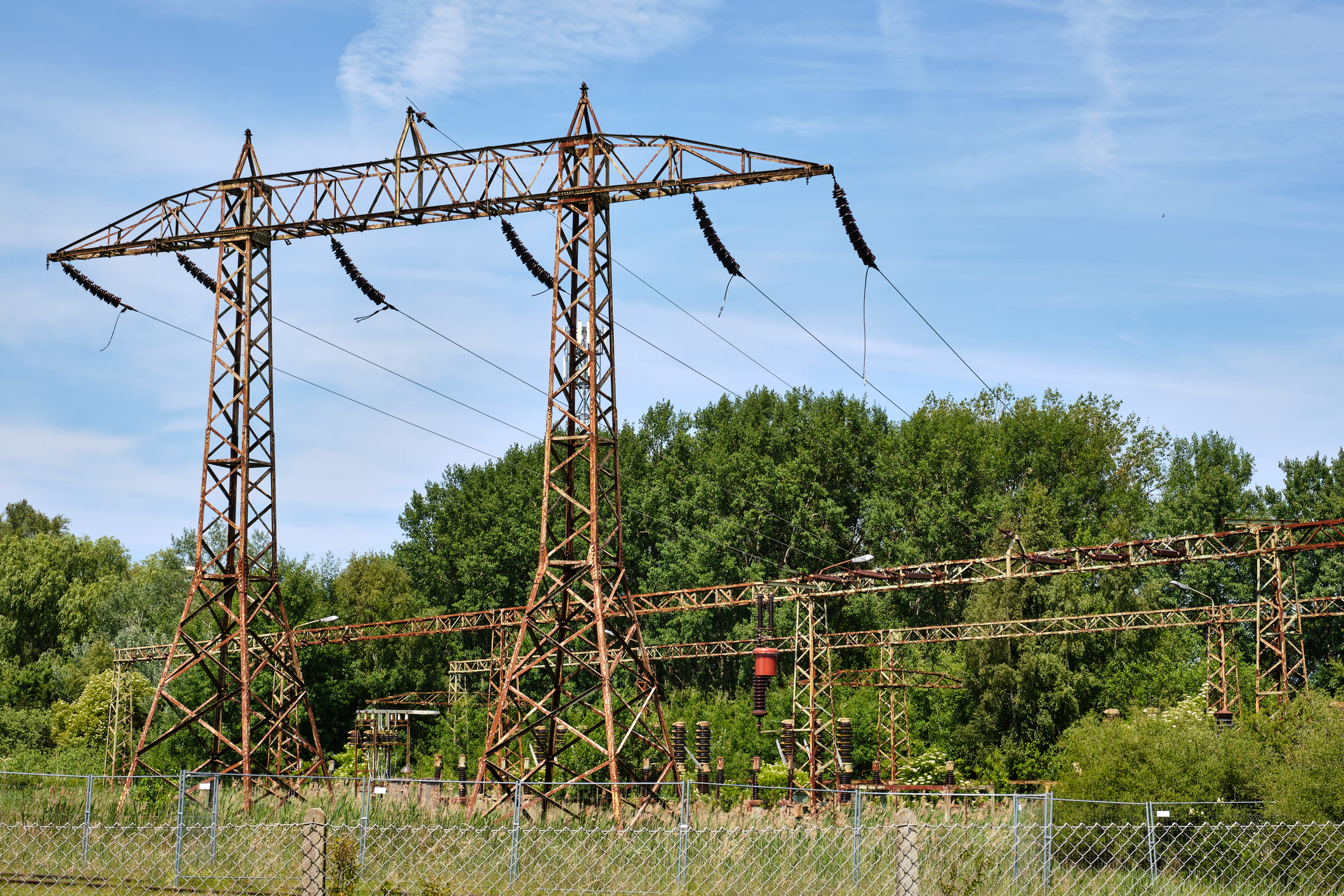
With energy demand rapidly spiking, and costs for infrastructure rising, utilities are struggling to keep up. Fortunately, through the use of Grid-Edge distributed energy resource management systems (DERMS), utilities can leverage the increasing proliferation of behind-the-meter distributed energy resources (DERs) to provide relief for aging infrastructure.
In This Article
- U.S. Infrastructure Statistics
- A Brief History of the U.S. Grid
- Keeping Up With New Demand With Old Infrastructure
- The Power of Grid-Edge DERMS
- Demand Flexibility: Leveraging DERs for Aggregate Load Shifting
- Enhance Grid Resilience Today
- Hurry Up & Wait: The Grid Interconnection Queue Challenge
U.S. Grid Statistics
Many of the wires, poles, and transformers delivering power to American homes today were built for a grid that no longer exists. They were sized for predictable, one-way flows of electricity from a handful of centralized power plants to a slowly growing customer base. That grid is gone, replaced by one straining to absorb EVs, rooftop solar, data centers, and heat pumps on equipment never built to carry this much load for this long.
The numbers make the case on their own:
- Over 70% of U.S. power transformers and transmission lines are more than 25 years old, and the average large power transformer in service is nearing 40, according to the Department of Energy.
- Roughly 55% of distribution transformers have already passed 33 years in service, per the National Renewable Energy Laboratory, despite a design lifespan of 30 to 40 years.
- Replacing this equipment at scale would cost trillions of dollars and take decades utilities don’t have.
That gap —between what aging infrastructure can physically handle and what customers now demand from it— is exactly where Grid-Edge DERMS software thrives. Instead of racing to replace every aging transformer, utilities are using software to manage the load those assets carry, extending their useful life while still meeting rising demand.
Aging Assets: How We Got Here
Most U.S. transmission and distribution infrastructure was built during two boom periods:
- Post-World War II electrification, which established the backbone of today’s transmission network
- The suburban expansion of the 1960s and 70s, which built out the distribution equipment still serving many neighborhoods today
Aging equipment isn’t automatically a crisis. Transformers, breakers, and lines can run safely for decades with proper maintenance. The problem is that the assumptions behind their original design no longer hold:
- Steady, predictable load growth
- Consistent peak timing
- One-directional power flow, from plant to customer
Today’s grid instead has to handle distributed solar pushing power backward through equipment built for one direction only, EV chargers creating new evening peaks, and data centers demanding continuous, high-density power that dwarfs a typical neighborhood’s draw.
New Demand, Meet Old Infrastructure
Electrification is compounding the aging-infrastructure problem, not replacing it as a separate concern. A few key pressures are converging at once:
- EV adoption is projected to significantly increase electricity use by 2050
- Data centers already account for a growing, outsized share of total demand
- Broader electrification of heating and industrial processes is adding load utilities didn’t plan for decades ago
Combined, these trends could push transformer capacity needs up by 160% to 260% in the coming decades, according to NREL.
Making matters worse, the equipment needed to serve that demand is harder to get than ever:
- Transformer lead times have stretched from months to years in some cases
- Prices for available equipment have climbed sharply
- Supply chain analysts describe the shortage as a genuine bottleneck for grid buildout
Utilities can’t order their way out of this. The equipment isn’t available on a timeline that matches demand growth, which makes managing existing capacity more valuable than ever.
The Grid & Distributed Energy Resources
Cost plays a significant factor in meeting the challenges posed by rising demand. For example, projections indicate that utilities anticipate spending $1.4 trillion over the next five years to keep up with demand from AI and data centers alone. These costs are further compounded by aforementioned supply chain and tariff issues, continued electrification efforts, and increasingly volatile and unpredictable weather patterns and temperature extremes.
Fortunately, As noted, the distributed energy resource (DER) market is in a period of extreme growth, as more and more site owners add BTM DERs like solar, battery energy storage systems (BESS), electric vehicles, EVSE chargers, and smart home devices like thermostats and water heaters to their properties. These BTM DER assets provide opportunities for utilities to offset costs through the aggregate load shifting provided by Grid-Edge DERMS platforms.
For example, research indicates that demand flexibility programs like virtual power plants (VPPs) cost roughly 40-60% less than traditional power plants. Right now, research indicates that the U.S. will add approximately 217 GW in DER capacity —roughly the same amount of power generated by all U.S. coal-fired plants— between 2024 and 2028.
What Grid-Edge DERMS Actually Does for Aging Assets
A distributed energy resource management system, or DERMS, is software that aggregates and coordinates distributed energy resources, such as smart thermostats, water heaters, batteries, and EV chargers, to manage electricity demand in a given area. Unlike Grid DERMS, which manage front-of-meter, utility-owned DER assets, Grid-Edge DERMS focus specifically on behind-the-meter devices in homes, businesses, and industrial facilities, as opposed to utility-owned, grid-scale assets like substation batteries.
The connection to aging infrastructure is direct. When a substation transformer nears the end of its rated life and can’t safely absorb more peak load, a utility has traditionally had two options:
- Replace the transformer at significant cost and lead time
- Accept the risk of running it padfast capacity
A Grid-Edge DERMS adds a third option: reduce the peak load that each transformer has to carry in the first place.
By coordinating thousands of small, distributed devices, a Grid-Edge DERMS can shave meaningful load off the top of a demand curve during the hours that stress aging equipment hardest. That looks like:
- Cycling water heaters during peak windows
- Pre-cooling homes ahead of a heat event
- Staggering EV charging schedules across a service territory
Flattening that peak doesn’t make a 40-year-old transformer new again, but it can meaningfully extend how long that asset keeps operating safely, and defer the capital expense of replacing it before it’s absolutely necessary.
Turning Flexibility Into Deferred Capital Spending
This is where demand flexibility programs connect directly to the infrastructure conversation. Every megawatt of peak demand a utility can shift or shed through a coordinated device program is a megawatt that doesn’t have to be served by new generation, new transmission capacity, or an accelerated transformer replacement schedule.
A few programs do most of the heavy lifting:
- Demand response shifts or reduces load during peak windows, buying utilities additional runways on existing equipment, often at a fraction of the cost and none of the lead time of a transformer replacement.
- Virtual power plants aggregate batteries, thermostats, and EVs into a coordinated, dispatchable resource that can deliver a predictable load shape during a grid event, hedging against both wholesale market volatility and the physical limits of aging local infrastructure.
- EV managed charging shifts one of the fastest-growing loads on the grid away from early evening hours, when residential peak demand and equipment stress are already highest, toward overnight hours when capacity is abundant.
For a utility staring down a substation nearing its thermal limits, that shift changes the capital planning conversation entirely.
Resilience is Part of the Equation Too
Aging infrastructure isn’t just a capacity problem, it’s a reliability one. Older equipment fails more often and less predictably, particularly during the extreme weather events that have become more frequent in recent years. The American Society of Civil Engineers’ D+ grade for U.S. energy infrastructure reflects not just age, but the compounding risk of stressed, outdated equipment operating in increasingly severe conditions.
Distributed energy resources add a layer of resilience centralized infrastructure alone can’t provide:
- Coordinated battery storage can maintain partial functionality during a localized outage
- Smart device fleets can reduce the severity of cascading failures when aging equipment does fail
- Localized dispatch can target relief to the specific circuits or substations under the most stress
None of this replaces infrastructure investment. It’s a meaningful complement to it, especially in the years before a full equipment refresh is financially or logistically possible.
A Practical Path Through a Slow-Moving Problem
No single utility or regulatory body is modernizing the entire U.S. grid in the next five years. The scale of investment required, reasonably estimated in the trillions of dollars, and the physical realities of manufacturing and installing new equipment make this a multi-decade undertaking no matter how much urgency utilities bring to it.
Research indicates that less than 20% of potential DER capacity in the U.S. was enrolled in demand flexibility initiatives in 2024. As such, connecting with customers to increase enrollment and participation is critical to meeting rising demand without breaking the bank on costly infrastructure upgrades.
Modernizing Aging Assets With Grid-Edge DERMS Software Conclusion
What utilities can control right now is how intelligently they manage the load running through the infrastructure they already have. Still, while Grid-Edge DERMS software doesn’t fix things like a 40-year-old transformer, through functionality like localized dispatch, it does change how hard that transformer has to work, and that difference is often what separates a manageable capacity constraint from an expensive emergency. For utilities looking to extend the runway on aging assets while the broader modernization effort catches up, coordinating the distributed energy resources already sitting in their service territory is one of the most immediate levers available.
Do you have the right Grid-Edge DERMS for your needs?