Platform
 Grid-Edge DERMS
 Customer Engagement
 Demand Forecasting
 BYOD
BYOD Customer Engagement
 Demand Response
 EV Charging
 Incentive Processing
 Program Design
 Program Management Automation
 Localized Dispatch
 Virtual Power Plants
 API Integrations
 C&I
C&I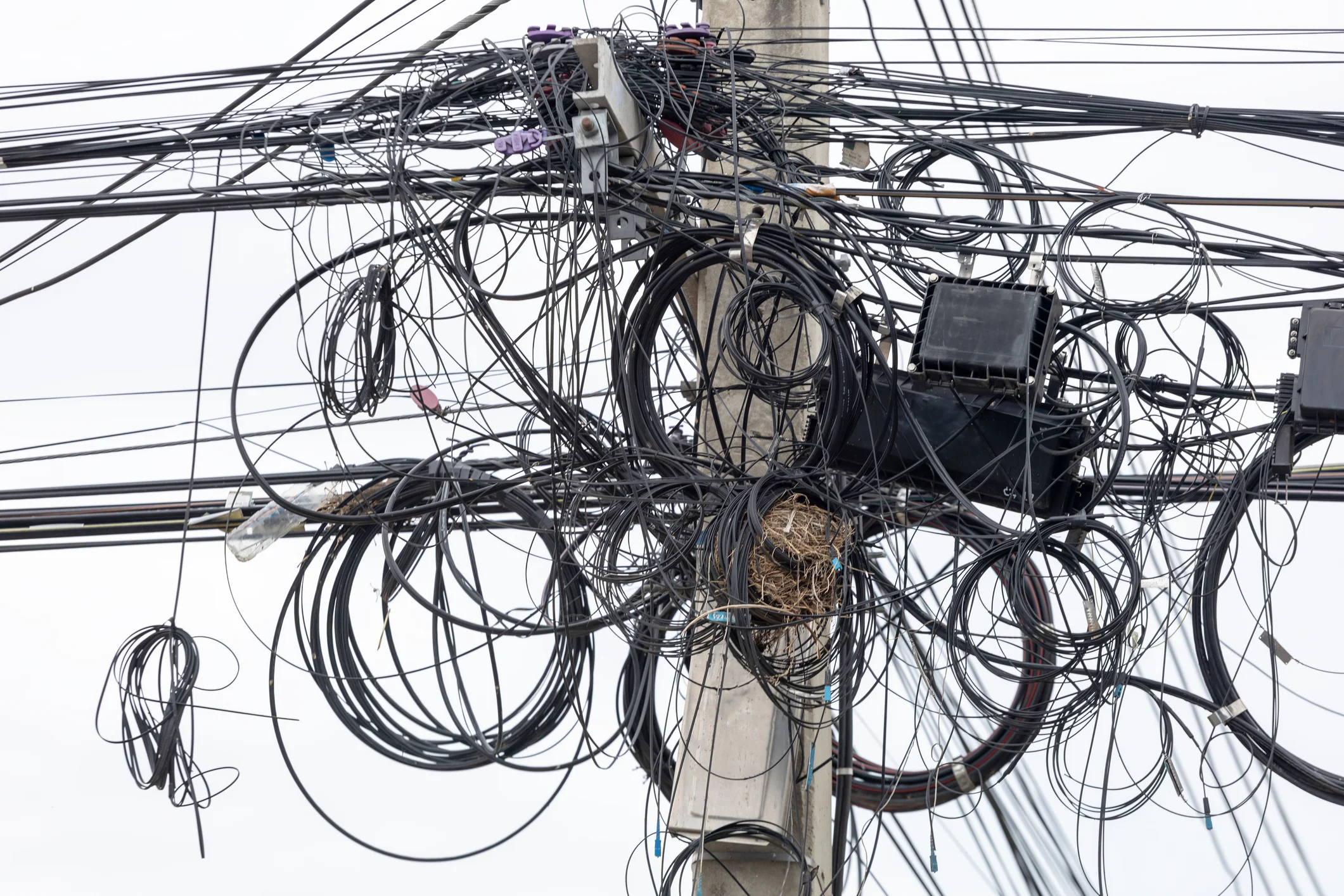
Grid congestion is intensifying. As of late-June 2026, the interconnection queue holds 1.74 TW of waiting projects. Upgrading the entire U.S. grid could cost up to $5 trillion. Here is how utility operators are using distributed energy resource management systems (DERMS) to leverage the distributed energy resources (DERs) proliferating across the country for use in demand flexibility strategies designed to find capacity now — without waiting in line.
In This Article
- Grid Capacity vs. Grid Congestion: Definitions
- The State of the Grid Interconnection Queue
- The Cost of Upgrading the Grid
- Why Fossil Fuels Alone Cannot Solve Congestion
- What Is Virtual Capacity?
- How DERMS Creates Virtual Capacity
- Grid DERMS vs. Grid-Edge DERMS for Congestion Relief
- Load Shifting Strategies: Demand Response, EV Charging, VPPs
- Topline Demand Control: Guaranteed Outcomes from BTM DERs
- Building a Comprehensive DERMS Capacity Strategy
- Frequently Asked Questions
- Conclusion
Defining Grid Capacity vs. Grid Congestion
Grid Capacity
Grid capacity refers to the total volume of energy that the grid can reliably and safely deliver within existing infrastructure limits — including transmission lines, distribution lines, substations, and interconnection points. For context, in 2024, the U.S. added 20.2 GW of utility-scale electric generation capacity.
Definition: Grid Congestion
Grid congestion occurs when electricity demand exceeds the physical capacity of available transmission and distribution infrastructure. Congestion creates reliability risks, drives up wholesale energy costs, and can require demand curtailment or emergency dispatch of expensive peaker plants.
Over the last two years, both problems have intensified simultaneously. Demand has spiked due to AI and data center developments, supply chain and tariff pressures, and increasingly erratic weather patterns — while the pace of new capacity additions has slowed due to the same market uncertainties and lengthy interconnection processes.
- 20.2 GW — Utility-scale generation capacity added in the U.S. in 2024
- 1.74 TW aggregate capacity — Currently waiting in the grid interconnection queue (7,954 projects)
- $5T — Estimated cost to fully upgrade U.S. grid infrastructure (UT Austin, 2023)
- 20% — Of U.S. peak demand that virtual power plants (VPPs) can meet by 2030
The State of the Grid Interconnection Queue
Grid Interconnection Queue
The grid interconnection queue is the formal process by which proposed utility-scale generation and storage projects apply to connect to the existing grid. Projects must complete interconnection studies — which assess grid impact and required infrastructure upgrades — before receiving approval. Queue wait times routinely extend to multiple years.
As of this writing, the grid interconnection queue contains 7,954 requests representing an aggregate proposed capacity of 1.74 TW. These projects span new generation, battery storage, and hybrid resources — many filed in response to aging infrastructure and retiring fossil fuel plants.
The queue is not simply long — it is structurally slow. Interconnection studies are complex, sequential, and resource-constrained at the utility and regional transmission organization (RTO) level. Reform efforts are underway in several regions, but meaningful reductions in wait times are unlikely in the near term, particularly during the energy transition when project volumes are at historic highs.
Operational Implication
Capacity that is in the interconnection queue is not available capacity. Utilities facing congestion today cannot rely on queued projects to solve near-term reliability challenges — making non-wires alternatives like DERMS-based demand flexibility the most actionable path to capacity relief.
The Cost of Upgrading the Grid
In 2023, researchers at the University of Texas at Austin calculated that fully upgrading U.S. grid infrastructure — replacing distribution lines, building new power plants, and modernizing with current technology — would cost approximately $5 trillion. With U.S. inflation rising approximately 2.5% since that estimate, the figure has grown by roughly $125 billion and will only continue to climb.
The cost differential is significant for utility capital planning. Virtual power plants (VPPs) and DERMS-based demand flexibility programs do not eliminate the need for infrastructure investment, but they can defer it — buying time for interconnection projects to clear the queue, for infrastructure planning to mature, and for new technologies to reduce deployment costs further.
Why Fossil Fuels Alone Cannot Solve Grid Congestion
In January 2024, the Trump administration declared a National Energy Emergency, activating special executive powers to address rising demand. Federal energy policy has subsequently emphasized fossil fuels while deprioritizing renewable energy investment — a position that has drawn concern from grid planners and the scientific community.
The operational reality, however, is that fossil fuel capacity expansion faces its own constraints. Last summer, the Department of Energy deferred numerous fossil fuel plants, costing utilities and ratepayers millions of dollars per day. The recently restructured Tennessee Valley Authority (TVA) has similarly elected to defer coal plant developments.
Fossil fuel plants also remain subject to the same interconnection queue processes as renewable projects, the same supply chain pressures, and the same multi-year construction timelines. They address long-run capacity needs, but offer limited relief for near-term congestion — and their operating costs continue to rise as aging fleet efficiency declines.
Key Point: No single generation source — fossil fuel, renewable, or otherwise — can resolve grid congestion on its own within the timeframes that utilities and regulators require. Demand flexibility programs that reduce and shift load are the fastest-deployable, lowest-capital-cost tool available for immediate congestion relief.
What Is Virtual Capacity?
Virtual capacity is effective grid capacity created through demand flexibility programs — demand response, managed EV charging, and virtual power plants — rather than through physical generation or transmission infrastructure. By reducing or shifting load during peak periods, virtual capacity lowers effective demand, relieving congestion without new wires, plants, or interconnection approvals.
Virtual capacity is not a workaround — it is a legitimate, dispatchable grid resource. It operates on the demand side of the supply-demand equation: rather than adding supply to meet demand, it reduces or shifts demand to match available supply. The net effect on grid congestion is equivalent to adding physical capacity, at a fraction of the cost and on a much faster deployment timeline.
The primary vehicle for creating and managing virtual capacity at scale is a distributed energy resource management system (DERMS).
How DERMS Creates Virtual Capacity
A distributed energy resource management system (DERMS) is a software platform that aggregates, controls, and optimizes distributed energy resources (DERs) — including solar panels, battery energy storage systems (BESS), electric vehicles, EV chargers, smart thermostats, and water heaters — to provide grid services and support demand flexibility programs.
DERMS creates virtual capacity through three primary mechanisms:
- Load reduction — dispatching DERs to reduce consumption during peak periods, directly lowering the demand the grid must serve
- Load shifting — moving flexible loads (EV charging, water heating, battery charging) to off-peak periods, flattening the demand curve and reducing congestion windows
- Local generation dispatch — redirecting solar inverters or discharging battery storage to resupply the grid with locally generated energy during peak events
Each of these mechanisms reduces the effective demand load that creates congestion — without requiring a single new wire, transformer, or generation plant.
Grid DERMS vs. Grid-Edge DERMS for Congestion Relief
Not all DERMS platforms address congestion the same way. The distinction between Grid DERMS and Grid-Edge DERMS is critical for utility operators building a comprehensive capacity strategy.
Grid DERMS — Utility-Scale Assets
- Manages utility-owned DERs
- Grid-scale solar and battery installations
- On-premise / behind firewall
- Focuses on constraint management and grid optimization
- Static, observable, reliably dispatchable
- Established track record with grid operators
Grid-Edge DERMS — Behind-the-Meter Assets
- Manages customer-sited DERs
- Thermostats, water heaters, EV chargers, residential solar+storage
- Cloud-based SaaS platform
- Handles customer enrollment, engagement, dispatching
- Scalable across large residential and C&I device fleets
- Topline Demand Control enables guaranteed load outcomes
Grid DERMS provides reliable, guaranteed dispatch from utility-controlled assets — a static energy reserve that grid operators can depend on. Grid-Edge DERMS taps the much larger pool of customer-sited devices, creating flexible capacity at scale from assets that require minimal capital investment from the utility.
Critically, these platforms are complementary. A utility deploying both can address congestion from both the supply side (utility-owned DER dispatch via Grid DERMS) and the demand side (load reduction and shifting via Grid-Edge DERMS) simultaneously.
Load Shifting Strategies: Demand Response, EV Charging, and VPPs
Demand Response
Demand response programs are the most established form of virtual capacity. They work by dispatching control signals — typically adjusting thermostat or water heater setpoints — to enrolled customer devices during peak demand periods. The aggregate effect is a measurable, near-instantaneous reduction in load, providing immediate congestion relief without any physical infrastructure change.
Managed EV Charging
EV managed charging programs offer two distinct congestion management tools. First, load shifting: moving charging sessions from peak to off-peak periods through time-of-use pricing or direct dispatch. Second, vehicle-to-grid (V2G): pulling energy stored in EV batteries back to the grid during high-demand events, converting parked EVs into a distributed generation resource.
Virtual Power Plants (VPPs)
Virtual power plants represent the most comprehensive form of DERMS-based capacity. A VPP coordinates multiple DER types — solar, storage, thermostats, EV chargers — into a unified, dispatchable resource. Grid operators can access stored battery energy, redirect solar generation, and shift flexible loads simultaneously, providing a multi-vector response to congestion events.
Topline Demand Control: Guaranteed Outcomes from Behind-the-Meter DERs
Topline Demand Control (TDC) is a Grid-Edge DERMS capability that combines artificial intelligence, model predictive control (MPC), and forecasting software to guarantee a precise, pre-specified aggregate load outcome from behind-the-meter DER assets throughout a demand event window.
The longstanding limitation of behind-the-meter DERs for congestion management has been reliability: individual customer devices behave unpredictably, and aggregate outcomes without intelligent orchestration are noisy. Grid operators have historically been reluctant to commit to a specific megawatt target from a residential device fleet they cannot fully control.
Topline Demand Control addresses this directly. By continuously forecasting device state, modeling optimal dispatch sequences, and adjusting setpoints in real time, TDC enables a Grid-Edge DERMS to deliver a guaranteed load outcome — comparable in dispatchability to a utility-owned grid asset.
For congestion management, this matters operationally: TDC transforms Grid-Edge DERMS from a probabilistic demand flexibility tool into a firm, committable capacity resource that grid operators can include in their dispatch plans with confidence.
Building a Comprehensive DERMS Capacity Strategy
The most effective approach to DERMS-based congestion relief combines Grid DERMS and Grid-Edge DERMS into a unified load management strategy:
- Grid DERMS provides a reliable, static baseline of dispatchable capacity from utility-owned assets — the foundation grid operators can count on
- Grid-Edge DERMS with TDC layers in a scalable, guaranteed-outcome flexible capacity from customer-sited devices — amplifying the total available response
- Virtual power plant programs coordinate multiple DER types for multi-vector congestion response
- Demand response and managed EV charging provide immediate, near-real-time load reduction tools for acute congestion events
Together, this strategy creates a non-wires alternative to grid infrastructure investment — meeting capacity needs through demand management rather than supply addition, deferring billions in infrastructure costs while the interconnection queue clears and long-term grid investment plans mature.
Bottom Line for Grid Operators: The interconnection queue is not getting shorter. Grid upgrade costs are not getting lower. The fastest, most cost-effective path to capacity relief available today is a comprehensive DERMS strategy that combines utility-scale asset dispatch with behind-the-meter demand flexibility — delivering virtual capacity at 40–60% of the cost of conventional generation.
Frequently Asked Questions
- What is grid congestion?
Grid congestion occurs when electricity demand exceeds the physical capacity of the transmission and distribution infrastructure available to deliver it. It is distinct from grid capacity, which refers to the total volume of energy the grid can reliably deliver within existing infrastructure limits. Congestion leads to reliability risks, increased operational costs, and potential demand curtailment. - What is the grid interconnection queue?
The grid interconnection queue is the formal process by which proposed utility-scale generation and storage projects apply to connect to the existing grid. As of 2026, it contains 7,954 requests representing 1.74 TW of aggregate proposed capacity. Projects routinely wait years for interconnection studies and approval, making queued capacity unavailable for near-term congestion relief. - What is virtual capacity?
Virtual capacity is effective grid capacity created through demand flexibility programs — demand response, managed EV charging, and virtual power plants — rather than through physical generation or transmission infrastructure. By reducing or shifting load during peak periods, virtual capacity relieves congestion without new wires, plants, or interconnection queue approvals. - How does DERMS reduce grid congestion?
A DERMS reduces grid congestion by aggregating DERs — including solar, battery storage, EV chargers, thermostats, and water heaters — and dispatching them to reduce or shift load during peak demand periods. Grid DERMS manages utility-owned assets; Grid-Edge DERMS manages behind-the-meter customer devices. Together, they create virtual capacity that relieves congestion without new infrastructure investment. - What is Topline Demand Control?
Topline Demand Control (TDC) is a Grid-Edge DERMS capability that uses AI, model predictive control, and forecasting to guarantee a precise aggregate load outcome from behind-the-meter DER assets during a demand event. TDC enables grid operators to rely on customer-sited devices with the same confidence as utility-owned assets — making Grid-Edge DERMS a firm, dispatchable capacity resource. - What is a non-wires alternative?
A non-wires alternative (NWA) is any solution that defers or avoids the need for new transmission or distribution infrastructure by managing demand or deploying distributed resources. DERMS-based demand flexibility programs — demand response, managed EV charging, and virtual power plants — are among the most scalable NWAs available, capable of meeting up to 20% of U.S. peak demand by 2030 at 40–60% of the cost of conventional generation.
How DERMS Resolves Grid Congestion Without New Infrastructure Conclusion
Grid congestion is a structural challenge, not a temporary one. The forces driving it — AI-driven demand growth, weather volatility, aging infrastructure, and constrained new generation pipelines — are not resolving quickly. The interconnection queue holds nearly 2 TW of capacity that will take years to materialize. A full grid upgrade would cost trillions.
DERMS-based demand flexibility offers a proven, deployable, cost-effective alternative. By aggregating and dispatching distributed energy resources — from utility-owned grid-scale assets to customer-sited thermostats and EV chargers — utilities can create virtual capacity that relieves congestion today, defers infrastructure investment, and builds a scalable foundation for long-term grid reliability.
The combination of Grid DERMS, Grid-Edge DERMS, and capabilities like Topline Demand Control gives grid operators a comprehensive load management toolkit: firm, dispatchable, and available without waiting in line.
The Lesson: Virtual capacity is real capacity. Utilities that deploy a comprehensive DERMS strategy today are not deferring the problem — they are solving it, at a fraction of the cost of physical infrastructure, on a timeline that the interconnection queue cannot match.
Do you have the right Grid-Edge DERMS for your needs?