Platform
 Grid-Edge DERMS
 Customer Engagement
 Demand Forecasting
 BYOD
BYOD Customer Engagement
 Demand Response
 EV Charging
 Incentive Processing
 Program Design
 Program Management Automation
 Localized Dispatch
 Virtual Power Plants
 API Integrations
 C&I
C&I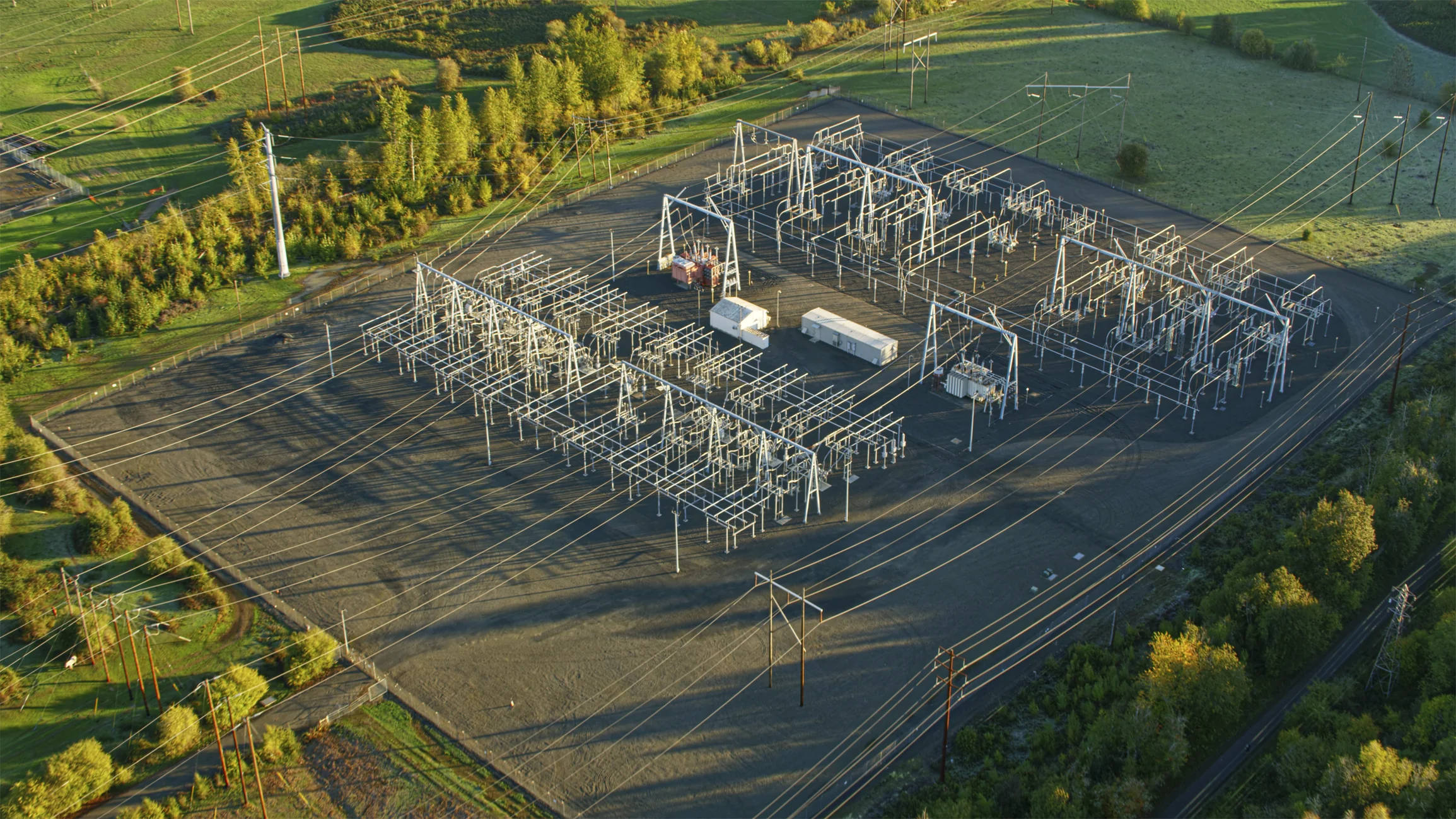
Rising electric demand is forcing utilities to make a capital-intensive decision: pour money into new infrastructure like substations, transformers, and grid-scale storage, or buy energy from the wholesale market during periods of deep demand. Fortunately, there is a third viable option to meet demand: utilities can tap into the behind-the-meter distributed energy resources (DERs) already sitting behind the meter in homes and businesses across the service territory.
Balancing the need for new infrastructure with mounting operational and ratepayer costs with the rapidly increasing demand caused by AI data centers, supply chain and tariff challenges, electrification, and progressively extreme temperatures and weather patterns isn’t easy. Read on to learn how the growing availability of behind-the-meter (BTM) DERs can be leveraged for demand flexibility programs including demand response, virtual power plants, BYOD programs, and EV managed charging, in turn providing a useful framework to help utilities decide when to build and when to orchestrate.
In This Article
- Why This Decision Matters Now
- The Real Cost of New Substation-Level Infrastructure
- What BTM DERs Can Do Instead
- Proof Points: Batteries and Flexibility Working at Scale
- A Framework for Build vs. Orchestrate
- Frequently Asked Questions
- Terms Glossary
- Conclusion
Why This Decision Matters Now
U.S. electricity demand is set to grow by roughly 128 gigawatts (GW) over the next five years, one of the sharpest increases utilities have faced in decades, according to a recent article by Jigar Shah, founding advisory chair of Deploy Action and former director of the DOE’s Loan Programs Office. Shah has warned that states risk responding the wrong way, since capital plans built to serve just 50 hours of annual peak load leave customers subsidizing an underutilized grid. His prescription isn’t to abandon new generation and transmission, but to squeeze more value from the system that already exists, starting with DERs, particularly community-scale solar and storage.
That tension is playing out most visibly in PJM Interconnection, the country’s largest wholesale power market. According to a recent report, PJM cannot build power plants fast enough to keep up with demand across its 67 million customers in 13 states, and the result has been steadily rising utility bills. Capacity market prices there have spiked more than eightfold in recent years, reaching a record $16.4 billion across its two most recent auctions, which are all costs that land on ratepayers.
Right now, there is around 1.92 TW of resources waiting in the grid interconnection queue. Per Lawrence Berkeley National Laboratory data, roughly 41% of U.S. projects that signed interconnection agreements between 2000 and 2022 eventually withdrew before getting built. Waiting on new infrastructure alone is simply no longer a reliable near-term strategy.
The Real Cost of New Substation-Level Infrastructure
Building new substations, transmission lines, and grid-scale generation remains essential for long-run reliability, but is nonetheless slow and expensive. Solar, wind, and battery projects that have already cleared PJM’s interconnection review still face years of delay before utilities complete the necessary secondary distribution or lateral power lines that branch off from primary transmission sources, and substation upgrades needed to connect them, in part because, as Canary Media notes, utilities don’t prioritize network upgrades the way they prioritize projects that let them roll costs into rates.
Large front-of-meter batteries can substitute for transmission upgrades in some cases, like Australia’s 850-megawatt Waratah Super Battery, which was built specifically to act as a giant shock absorber so nearby transmission lines could run at higher capacity without new wires, but that’s still a nine-figure capital outlay before it delivers a single megawatt of relief.
Even gas plants, often framed as the faster alternative, face manufacturing backlogs; analysis cited by Canary Media found storage can typically be built roughly two years faster than gas. For utilities facing an immediate capacity crunch, the infrastructure math often doesn’t pencil out on the timeline regulators and customers need.
What BTM DERs Can Do Instead
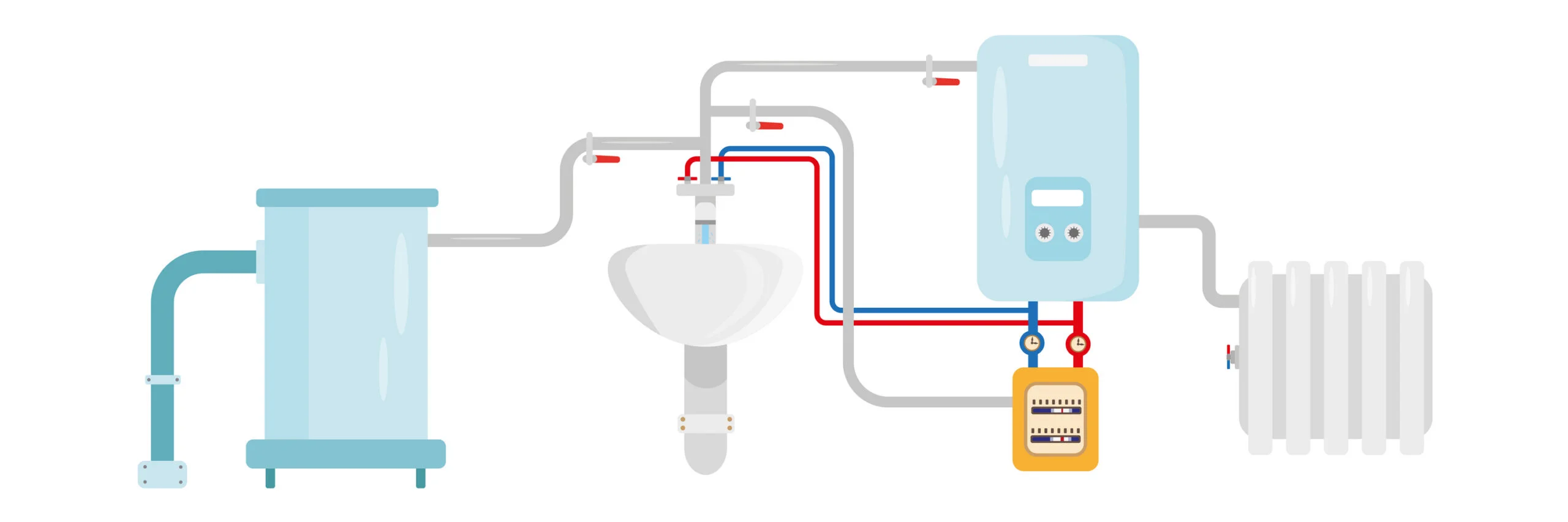
While utilities weigh multibillion-dollar build decisions, the distributed energy resources proliferating in customers’ homes and businesses are already available today. Behind-the-meter batteries, rooftop solar, smart thermostats, water heaters, and EV chargers can be aggregated and dispatched to reduce or shift load during peak periods, creating virtual capacity without new wires, transformers, or interconnection approvals.
The economic case has strengthened considerably from a decade ago. As Andy Lubershane of Energy Impact Partners put it on Latitude Media’s Catalyst podcast, distributed energy resources were hyped a decade ago as a way to offset grid infrastructure expansion, but never took off at scale, likely because the technology carried high price tags and a short track record next to the substations and transmission lines utilities already knew how to build. Today, falling system costs and worsening grid bottlenecks have changed that calculus.
Where this matters most is at the substation and feeder level, where localized congestion, not system-wide shortfalls, is often the real bottleneck. Orchestrating DERs at that granularity can defer specific, localized substation and feeder upgrades without a full buildout, buying time for permitting, financing, and interconnection to catch up.
Research from the U.S. Department of Energy backs this locational approach: DER value depends heavily on when and where a system generates power, and that value has historically been hard to quantify due to changing grid conditions and a lack of site-specific data. Newer parcel-level modeling from NREL is closing that gap, giving planners a clearer picture of where DERs deliver the most benefit and where a wires-based investment still makes more sense.
Proof Points: Batteries and Flexibility Working at Scale
Recent real-world evidence for demand flexibility’s reliability value comes from California. As the Los Angeles Times has reported, the state hasn’t needed to issue a Flex Alert in nearly four years, a shift officials attribute largely to growth in battery storage.
CAISO peak grid capacity reached just over 50,000 megawatts five years ago; today it’s nearly 70,000 megawatts, with more than 17,000 megawatts of battery storage added in that span, according to CAISO spokesperson Jayme Ackemann. California hasn’t issued a Flex Alert since 2022 or run rotating outages since 2020, even through record-setting August heat, largely because batteries store solar energy captured during the day for dispatch as demand peaks in the evening. That resilience isn’t absolute, as extreme heat can still cause equipment failures, but the trend is unmistakable.
The national battery buildout tells a similar story. Utility-scale battery storage capacity grew at an average annual rate of 70% over the last three years, reaching nearly 52 gigawatts of nameplate capacity by mid-2026, according to the U.S. Energy Information Administration, with another 54 gigawatts planned over the next two and a half years. That growth curve applies as much to distributed, customer-sited storage as to grid-scale projects, exactly the kind of proliferating BTM resource utilities can orchestrate rather than duplicate with new infrastructure spend.
The opportunity extends beyond residential load, too. Off-grid renewable systems paired with industrial heat pumps and thermal storage could economically supply up to one-third of U.S. industrial heat demand by 2035, according to UC Berkeley researchers cited by Utility Dive, proof that flexible, distributed resources scale into commercial and industrial demand flexibility too, an area increasingly relevant to virtual power plant program design.
A Framework for Build vs. Orchestrate
Neither path wins outright here. As you might expect, the right answer depends on the problem a utility is actually solving:
Consider building when:
- The demand shortfall is structural and long-term, not a peak-hour problem
- Load growth is concentrated and persistent (new industrial facilities, data centers); existing infrastructure is aging past its functional life
- Reliability standards require guaranteed, always-on capacity that flexibility can’t fully replicate.
It’s time to orchestrate when:
- The challenge is peak-hour or seasonal congestion, not a baseline shortfall
- Interconnection queues put new infrastructure years away
- A substation or feeder is nearing its thermal limit but full replacement isn’t yet justified
- The utility needs to defer capital spend while demand patterns and technology costs evolve.
In practice, most utilities need both new infrastructure and the DER aggregation provided by Grid-Edge distributed energy resource management systems (DERMS). Grid-scale investment addresses resources that must be firm and centrally controlled; DER orchestration addresses flexible, fast-deployable capacity that can come online in months rather than years. These are complementary tools, not competing strategies, and provide opportunities for utilities to meet near-term demand growth without over-committing capital.
FAQs
What is a distributed energy resource (DER)? Any small-scale energy asset on the customer side of the meter, including rooftop solar, home battery storage, EVs and chargers, smart thermostats, and water heaters are common examples. DERs can generate, store, or shift electricity use.
What does “behind-the-meter” (BTM) mean? Energy assets located on the customer’s side of the utility meter, as opposed to “front-of-meter” or grid-scale assets utilities own and operate directly.
Why can’t utilities just build more substations to keep up with demand? They can, and often must, but new infrastructure like substations, transmission lines, and grid-scale generation face multi-year interconnection queues, rising costs, and permitting delays that leave a near-term gap flexibility programs can help close.
Can demand flexibility programs actually replace new infrastructure? Not entirely, but they can defer or reduce the scale of new investment by relieving peak-hour congestion. Ultimately, they don’t replace the need for baseline capacity and aging-infrastructure replacement long term, but they do provide opportunities for utilities to strategically invest resources.
How do utilities decide which substations or feeders to target first? Locational value modeling, assessing where DERs provide the most benefit based on grid conditions, feeder-level constraints, and adoption patterns, helps utilities prioritize flexibility programs versus physical upgrades. Locational dispatching tools can get even more granular, allowing utilities to target areas that may have infrastructure needs or challenges specifically.
Terms Glossary
- Demand Response (DR): Reducing electricity consumption during peak periods by adjusting customer devices, typically in exchange for incentives.
- DERMS: Software that aggregates, monitors, and dispatches DERs to support demand flexibility programs.
- Grid Congestion: When electricity demand exceeds the physical capacity of available transmission or distribution infrastructure.
- Interconnection Queue: The formal review process for new generation, storage, or hybrid projects that must clear before connecting to the grid.
- Non-Wires Alternative (NWA): A demand-side or distributed solution that defers or avoids new transmission or distribution infrastructure.
- Substation: A facility that transforms voltage and routes electricity between transmission and distribution systems, a key chokepoint for local grid capacity.
- Virtual Power Plant (VPP): A network of DERs coordinated as a single, dispatchable resource to provide grid services.
When to Build vs. When to Orchestrate BTM Distributed Energy Resources (DERs) Conclusion
Building substation-level infrastructure and orchestrating behind-the-meter DERs isn’t a binary choice. The demand growth utilities face over the next five years guarantees both physical investment and distributed flexibility will be necessary. What’s changed is the calculus: DERs that were too costly and unproven a decade ago are now proliferating across service territories, and the data on locational value, battery growth, and grid reliability increasingly points to demand flexibility as the faster, lower-capital lever to pull first, while longer-term infrastructure investment catches up.
Get the Playbook for Running Best-in-Class Demand Flexibility Programs