Platform
 Grid-Edge DERMS
 Customer Engagement
 Demand Forecasting
 BYOD
BYOD Customer Engagement
 Demand Response
 EV Charging
 Incentive Processing
 Program Design
 Program Management Automation
 Localized Dispatch
 Virtual Power Plants
 API Integrations
 C&I
C&I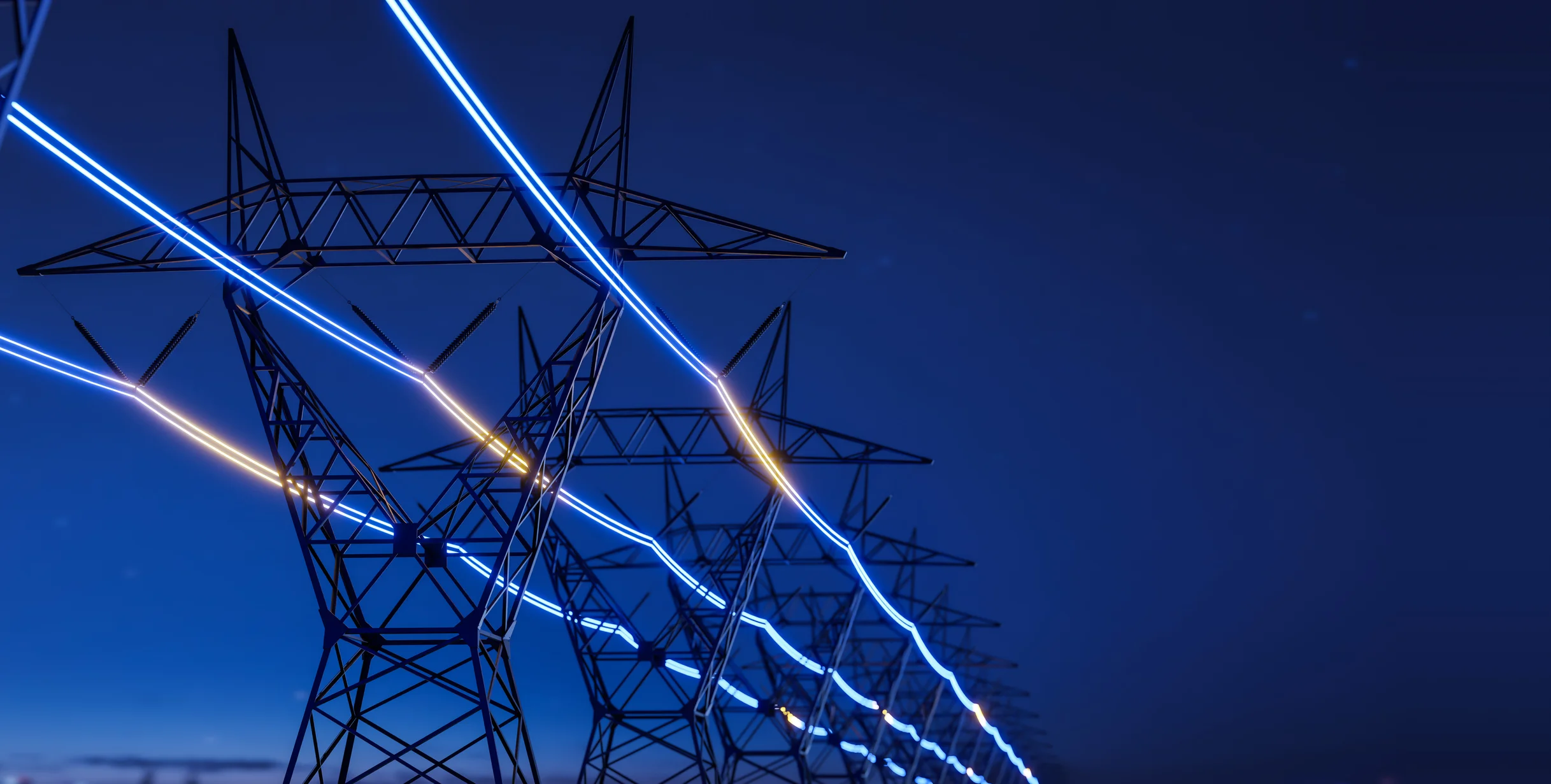
Over the last two years, demand has spiked exponentially, driven by factors like AI and data center developments, supply chain and tariff challenges, as well as erratic weather patterns and temperature extremes. These issues have exacerbated grid congestion, as utilities struggle to meet demand.
Fortunately, through the use of a distributed energy resource management system (DERMS), demand flexibility programs like demand response, EV charging, and virtual power plants (VPPs) create and foster the virtual capacity needed to minimize construction costs and lower grid congestion.
What is Grid Capacity & Congestion
Grid capacity refers to the total volume of energy that the grid can reliably and safely deliver along existing infrastructure limits, such as transmission and distribution lines. By contrast, grid congestion refers to situations where the demand exceeds the physical capacity. In 2024, the U.S. added 20.2 GW of utility-scale electric generation capacity.
In the interim, load capacity growth has slowed due to the market uncertainty caused by AI and data center developments, supply chain and tariff issues, while facing further challenges from the incessant threat of climate change-induced weather damage. These factors are further curtailed through lengthy grid interconnection queues, which can take years to realize.
The State of the Grid Interconnection Queue
The grid interconnection queue is the line to connect proposed utility-scale generation and storage projects to the existing grid. As of this writing, the grid interconnection queue features a total of 8968 requests to secure an aggregate capacity of 1.82 TW. These projects represent new developments for utilities to generate or store power, typically in response to aging infrastructure.
An example of aging infrastructure includes fossil fuel plants, which are usually retired as they become less efficient. The grid interconnection queue is designed to circumvent this by developing new opportunities to expand aggregate grid capacity.
Upgrading the Grid is Expensive
In 2023, researchers at the University of Texas at Austin calculated that upgrading the U.S. grid would cost approximately $5 trillion. This cost involves replacing distribution lines, building new power plants when and where needed, and otherwise modernizing the grid with updated technology.
– Syd Bishop, Sr. Content Specialist, Virtual Peaker
Since then, the U.S. inflation rate has risen by approximately 2.5%, an increase of $125 billion. While inflation doesn’t always go up, this does demonstrate that the longer the wait, the more likely an increase in the overall costs.
By contrast, virtual power plants (VPPs) are only 40-60% of the cost of conventional electricity generation plants. Furthermore, increasing VPP capacity can meet up to 20% of U.S. peak demand by 2030, while providing an affordable alternative to new power plant construction.
Fossil Fuels Alone Will Not Decrease Grid Congestion
In January 2024, the incoming Trump administration declared a National Energy Emergency, which activates special executive branch powers and is intended to address increased demand. Since then, the Department of Energy (DOE) has emphasized fossil fuels while moving away from renewable energy sources as part of our national energy plan, causing some concern within the scientific community.
Last summer, the DOE deferred several fossil fuel plants, costing both the utility and ratepayers millions of dollars per day. These efforts continue, as the recently restructured Tennessee Valley Authority (TVA) has elected to continue to defer coal plant developments.
Demand Flexibility & Grid Capacity
Demand flexibility programs are realized through the use of a DERMS platform, which aggregates distributed energy resources (DERs) like solar, battery energy storage systems (BESS), electric vehicles, EVSE chargers, and smart home devices like thermostats and water heaters for use in load shifting initiatives. For example, demand response often works by manipulating temperature set points on a thermostat or water heater to decrease energy demand during peak periods of usage.
– Syd Bishop, Sr. Content Specialist, Virtual Peaker
Not all DERMS are created the same. Grid DERMS manage utility-held DER assets like utility-scale solar and battery installations. Grid-Edge DERMS aggregate behind-the-meter (BTM) meter DER assets found in place like residential, commercial, and industrial properties, all found at the grid’s edge. Together, DERMS foster energy security by decreasing aggregate demand. Demand flexibility strategies can mitigate peak energy market costs while enhancing grid resiliency, in turn lowering overall operating costs for utilities.
The Potential Load Shifting Capabilities of DERMS
Through either a Grid or Grid-Edge DERMS, utilities can shift load to off-peak periods of usage. As noted, demand response often achieves this through aggregate conservation: losing less collectively to decrease the strain between supply and demand. EV charging or battery programs function in several ways, including by throttling or entirely changing battery charging times during grid events.
Virtual power plants (VPPs) offer a robust response from any DERMS by providing multiple paths to energy security. First, grid operators can access stored energy through batteries or redirect solar inverters to resupply the grid with freshly generated energy assets. Likewise, V2G charging strategies allow utilities to push and pull from energy storage as needed, shifting ambient energy supplies to meet immediate demand.
The Value of a Comprehensive DERMS Strategy
It’s unlikely that the grid interconnection queue will decrease wait times in the near future, especially during the energy transition. Likewise, dependable fuel supplies like fossil fuels represent a finite and increasingly expensive means of meeting demand in the long run.
Grid operators often rely on Grid DERMS as a static, observable energy asset that they can reliably dispatch. Through the use of functionality like Topline Demand Control (TDC), which combines AI, model predictive control, the Shift Grid-Edge DERMS, and forecasting software, grid operators can rely on a guaranteed outcome from BTM DERs as well.
By combining the two, utility operators can create a comprehensive load management strategy that addresses both utility-held and BTM DERs to shift or redistribute electric load to meet demand, especially by employing TDC. This strategy offers an affordable, non-wires alternative to meeting demand while deferring expensive grid infrastructure costs.
Interconnection Queues vs. Virtual Capacity: Using DERMS to Find Capacity Despite Grid Congestion: Conclusion
Grid congestion continues to pose global challenges. To meet demand, utilities are turning to novel solutions that can save billions during the energy transition. This includes the deployment of DERMS to manage the proliferation of DERs in the U.S. and the demand flexibility initiatives that they unlock. Utilities can plan for the grid capacity needs by leveraging the conservation and redistribution opportunities that DERMS affords, all while lowering operational costs.
Do you have the right Grid-Edge DERMS for your needs?