Platform
 Grid-Edge DERMS
 Customer Engagement
 Demand Forecasting
 BYOD
BYOD Customer Engagement
 Demand Response
 EV Charging
 Incentive Processing
 Program Design
 Program Management Automation
 Localized Dispatch
 Virtual Power Plants
 API Integrations
 C&I
C&I
The theme for Earth Day this year is “Our Power, Our Planet.” This year emphasizes that environmental progress is driven by local action and technological innovation rather than by centralized policy alone. For the energy sector, it highlights the shift toward community-led energy resilience—leveraging behind-the-meter distributed energy resources (DERs)—and the power of individuals to stabilize the grid through distributed resources.
Virtual power plants (VPPs) support Earth Day objectives by aggregating BTM DER assets, including solar, battery energy storage systems (BESS), electric vehicles, EVSE chargers, and smart home devices like thermostats or water heaters, all in an effort to reduce reliance on expensive and dirty fossil-fuel peaker plants. By shifting energy demand to off-peak periods of usage, virtual power plants lower carbon emissions and make the electrical grid more sustainable and resilient.
State of the VPP Market
Last year, ICF reported that electric demand is expected to increase by approximately 25% by 2030. This growth is driven in part by energy-intensive AI and data center developments, supply chain and tariff challenges, and the increasingly volatile and erratic weather patterns and temperature extremes caused by climate change. Fortunately, virtual power plants can help mitigate these challenges.
– Amber Mullaney, VP of Marketing, Virtual Peaker
Virtual power plants (VPPs) are a decentralized demand flexibility strategy that uses distributed energy resource management systems (DERMS) to leverage DER assets to shift or redistribute communally-generated energy to off-peak periods of usage. For example, grid operators may use a Grid DERMS to manage utility-held DER assets like solar or battery installations to curtail charging periods and redistribute available energy resources to enhance grid resiliency and lower operational costs.
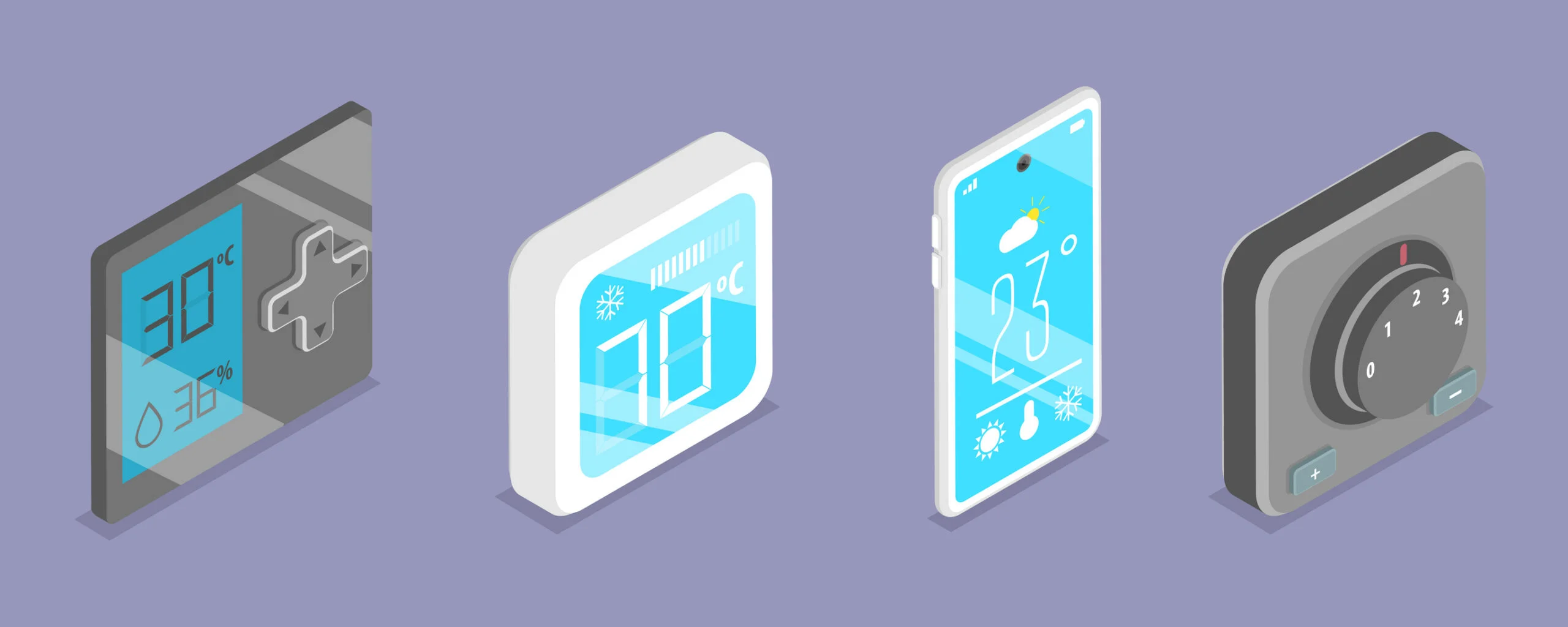
Likewise, Grid-Edge DERMS can aggregate and manage the otherwise disparate BTM DERs found at the grid’s edge to shift usage to off-peak periods of usage, such as through a demand response event, where temperature set points on customer thermostats are shifted for aggregate, grid-wide conservation. Especially when combined with Topline Demand Control (TDC), an innovative combination of the Shift Grid-Edge DERMS, forecasting software, AI, and model predictive control, grid operators can rely on dependable energy yields from BTM assets, ensuring a reliable load outcome every time.
VPP Quick Facts
Virtual power plants offer many opportunities for grid operators and program managers alike to meet their ambitious megawatt goals, while minimizing operational costs and enhancing grid resiliency. But don’t take our word for it! Did you know that virtual power plants:
- Can scale to meet 20% of U.S. peak energy demand by 2030? VPPs promote energy security and decrease peak energy market purchases.
- Lower your new construction costs? In comparison to traditional generation plants, VPPs cost only 40-60% to develop and deploy.
- Save electric utilities billions? Research indicates that deploying 60 GW of VPP capacity can save ratepayers between $15-35 billion in infrastructure costs.
- Are rapidly growing? Just last year, the U.S. VPP market hit 37.5 GW of load growth, a number that promises to increase!
- Have already caused growth due to data center deployments? Last year, Wood Mackenzie found that data center demand has driven a 33% growth in VPP deployments!
Slowly, innovation has shifted virtual power plants (VPPs) from concept to reality, from a buzzword to a must-have critical during the energy transition to meet rising demand. So what do VPPs mean this Earth Day and beyond?
3 Ways VPPs are Defining “Our Power” in 2026
The last two years have seen rapid increases in electric demand, with no real end in sight. As costs rise, electric utility customers are seeing an increase in bills that promises to last for the foreseeable future, in turn leading to political challenges across the U.S. Between legislation, regulation, and the existential challenges of a limited supply chain and rising demand, virtual power plants have taken on a whole new meaning in 2026. Let’s take a closer look at how.
1. Eliminating the Need for Carbon-Intensive Peaker Plants
Compared to virtual power plants (VPPs), traditional fossil fuel plants and peaker plants are dirty and expensive to maintain. Not only are fossil fuel plants more expensive than non-wires alternatives, but they further complicate utility planning, especially as planned retirements are deferred.
According to data from the U.S. Government Accountability Office (GAO), there were 999 peaker plans nationwide, accounting for 3.1% of annual net electricity generation. The pollution from these peaker plants creates environmental problems for the nearly 32 million Americans who live nearby, while raising costs for electric utilities: peaker plants have a limited utility and are expensive to maintain, leading industry thought leaders to consider viable alternatives such as battery-powered virtual power plants.
Virtual power plants can mitigate these high costs by:
- Leveraging both front-of and behind-the-meter DERs to affordably meet demand: Instead of burning gas, use grid-edge DERMS to orchestrate thousands of small energy shifts across a community.
- Aggregate conservation: This non-wires alternative reduces CO2 emissions while saving utilities millions in infrastructure costs.
2. Turning Data Centers into Flexible Assets
With the 2026 surge in AI-driven load growth, data centers have become a challenge for grid stability. As noted, these challenges have driven demand exponentially, leading to everything from higher power purchasing agreements to costly peak energy market costs. As noted, these demand increases are largely driven by the AI and data center developments necessary to expand LLM capacity.
– Amber Mullaney, VP of Marketing, Virtual Peaker
Research indicates that demand flexibility initiatives—including virtual power plants—are useful in managing the rise of electric demand by shifting high usage to off-peak periods of demand. Furthermore, if virtual power plants scale in tandem with AI and data center developments, utilities can curtail peak demand estimates with studies indicating that even a 0.25% can yield 76 GW of new load growth.
By strategically leveraging data centers for virtual power plant initiatives, utilities can:
- Innovate by getting more from less: Modern VPPs now integrate mid-sized behind-the-meter (BTM) batteries from commercial sites.
- Enhance sustainability efforts: By treating large-scale computing loads as flexible assets, we ensure that the intelligence of the future doesn’t come at the cost of the planet’s health.
3. Democratizing Energy through Community Engagement
The “Our Power” element of this year’s Earth Day theme implies that the people own the solution. According to the Smart Energy Consumer Collaborative (SECC) Consumer Understanding of Demand Response report, 53% of people surveyed said that they would participate in direct load control demand response initiatives, while 66% would participate in behavioral demand response initiatives.
Customer participation is essential to scaling any demand flexibility programs. These programs grow especially as utilities offer tech-agnostic pathways to program enrollment, broadening both the potential participant-base, while in turn lowering barriers to customer access. This leads to:
- Direct Participation: Residential virtual power plant programs allow everyday homeowners to contribute to Earth Day every day.
- The Outcome: When a smart thermostat adjusts by two degrees during a peak event, it’s a micro-action that, when scaled by a grid-edge DERMS, equals the output of a power plant.
3 Ways Virtual Power Plants Support Sustainability Efforts Conclusion
According to the Brattle Group, virtual power plants can potentially save U.S. electric utilities between $15-35 billion in capacity investments over the next decade. According to the Electric Power Research Institute (EPRI), data centers could grow to consume 9% of all U.S. electric generation by 2030. Virtual power plants can help mitigate these challenges while mitigating the impact of climate change. Likewise, virtual power plants provide a flexible solution for utility energy portfolios to help affordably meet demand during the energy transition and beyond.
Subscribe & Learn More About the Evolving Energy Landscape