Platform
 Grid-Edge DERMS
 Customer Engagement
 Demand Forecasting
 BYOD
BYOD Customer Engagement
 Demand Response
 EV Charging
 Incentive Processing
 Program Design
 Program Management Automation
 Localized Dispatch
 Virtual Power Plants
 API Integrations
 C&I
C&I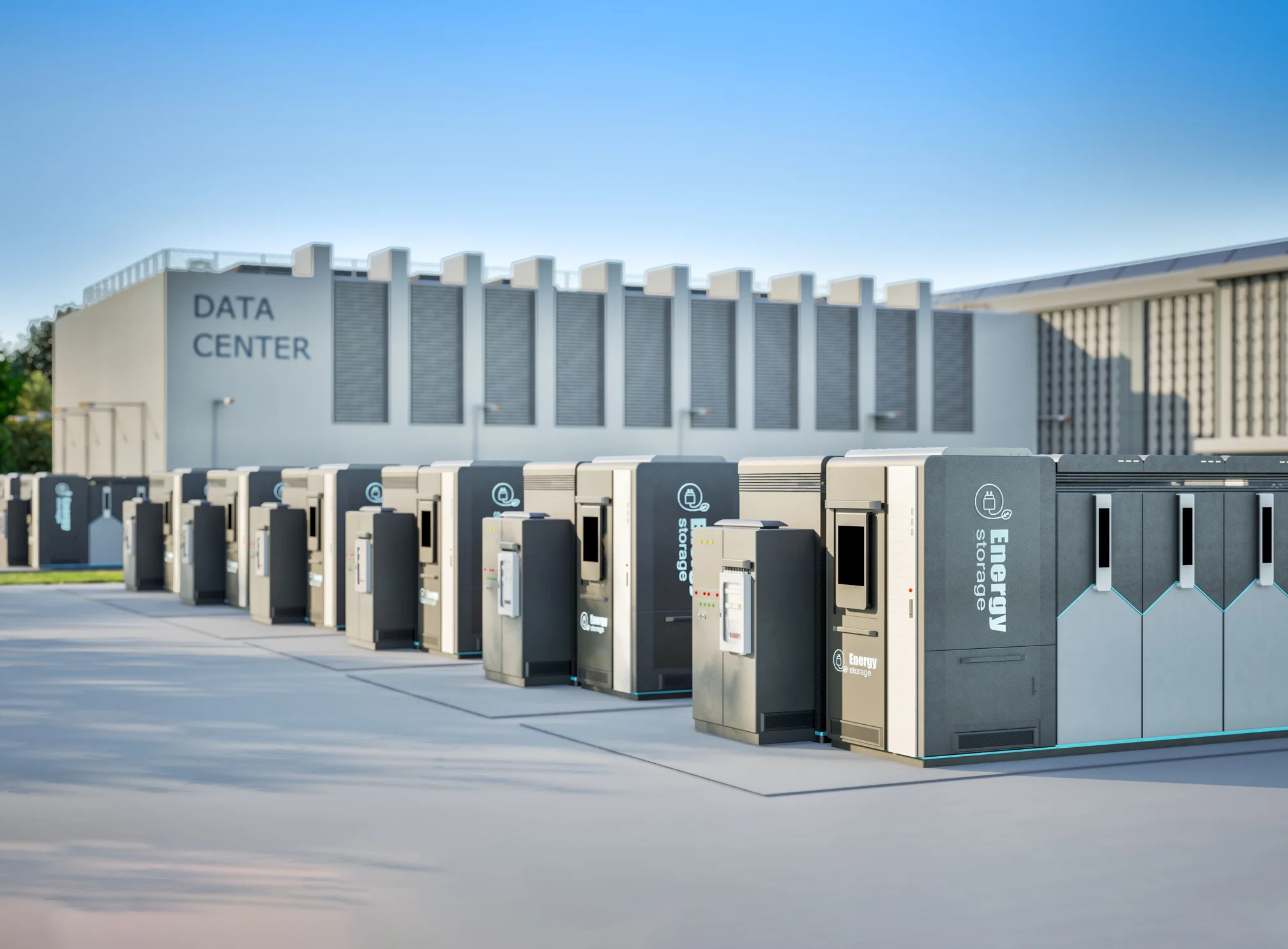
Data center load shifting is an effective demand flexibility strategy to minimize peak demand for data centers through aggregate conservation.
Last November, CNBC reported that data centers alone are projected to consume between 6.7% to 12% of total U.S. electricity by 2028. Further research suggests that data center growth can lead to 25-50 GW of additional fossil fuel generation by 2030.
These challenges are compounded by electrification efforts, increasingly erratic weather events and temperature extremes, and supply chain and tariff issues, which further challenge the infrastructure development needed to meet rising demand. Research indicates that if data centers can shift load by 25-50% during peak events, that U.S. utilities can reduce the need for costly infrastructure developments
What’s in this Article?
- What are Data Centers & What Challenges Do They Present?
- What Types of Data Centers Are Out There?
- How Load Shifting Through Demand Flexibility Adds Value
- Why Reliable Load Shifting is Imperative
- Defining the Data Center Challenge
- How Load Shifting Decreases New Infrastructure Costs
- How Public Pressure Is Shaping Data Center Policy
- Glossary of Terms
Defining Data Centers
Data centers have existed for roughly 75 years. Starting in the 1950s, data centers were developed to support computing power, which was scarce and resource intensive. Over time, data centers evolved to satisfy several purposes, from purpose-built systems designed to support specific functionality or cloud computing.
With the advent of large language model (LLM) AI, modern data centers have taken on a new social and environmental role across the country. These centers support AI learning, which requires substantial resources to power and cool, creating fresh challenges for electric utilities.
Types of Data Centers
Below is a brief overview of the most common types of data centers.
- AI data centers – Massive and energy hungry hyperscale data centers designed to support AI products like corporate cloud-scale workloads and manage big data.
- Edge data centers – A smaller and decentralized facility located in near proximity to end users, designed to process data local and support real-time data applications.
- Colocation data centers – A co-use facility that allows smaller businesses to lease available space at lower operational cost.
- Managed services data centers – Third-party managed data centers that companies can lease rather than buy.
- Enterprise data centers – Company owned and operated data centers often located on corporate campuses and designed to serve internal users.
The Value of Load Shifting
Load shifting refers to efforts taken by electric utility professionals to aggregate and shift load to off-peak hours of usage. Load shifting manifests in demand flexibility initiatives like virtual power plants (VPPs), demand response, or EV managed charging.
These strategies function by aggregating distributed energy resources (DERs) like solar, battery energy storage systems (BESS), electric vehicles, EVSE chargers, and smart home devices like thermostats or water heaters. These DER assets are controlled through a distributed energy resource management system (DERMS).
Likewise, time-of-use (TOU) rates or behavioral demand response represent alternative forms of load shifting, both of which operate by strategically leveraging customer participation in decreasing energy usage to avoid higher costs.
Reliable Energy is Critical
As noted, data centers serve many functions, many of which require a continuous load to realize. Because of that, some data center operators may be hesitant to participate in load shifting demand flexibility initiatives.
Software like Topline Demand Control (TDC) support those concerns by combining AI, model predictive control (MPC), forecasting, and Grid-Edge DERMS to allow for real-time granular device optimization. With TDC, data centers can participate in load shifting grid-events with the confidence that load shed does not interfere with device output. Put differently, data center operators, program managers, and grid operators can rest assured that through TDC, they can bank on a reliable load shifting outcome, without compromising functionality.
Defining the Data Center Challenge
According to the Pew Research Center, there are currently around 3000 data centers in operation in the U.S., with projects for about 1500 more. These projects are complicated by factors including:
- A grid interconnection queue – Currently the grid interconnection queue has 7,954 projects in the works, accounting for nearly 1.74 TW of projects upon completion and connection to the grid.
- Supply chain constraints & tariffs – Between supply chain constraints that have led to wait times on critical devices like transformers of up to 4 years, and tariffs on materials, new infrastructure development is both costly and takes longer than it used to.
- Public response – Broadly speaking, Americans don’t want data centers, which has led to political and regulatory challenges for utilities, and even lengthier wait times on data center projects in development.
Demand Flexibility Defers Infrastructure Costs
Research indicates that even an energy curtailment of 10% of total demand, could unlock 76 GW of capacity in the U.S., or, put differently, 10% of total U.S. peak demand. Demand flexibility programs achieve this curtailment, by aggregate DER control, load shifting energy consumption to off-peak periods of usage —typically 4 PM – 8 PM— to decrease energy demand through conservation. Further studies indicate that the aggregate load shifting possible through demand flexibility initiatives can lead to estimated savings on capital, operational, and energy market costs ranging between $40-$150 over the next decade.
Data Center Load Shifting Conclusion
Due to rising costs, logistical constraints, and public feedback, data centers have opened up to the potential for the use of load shifting demand flexibility initiatives… if that expedites their operational deployment. For utilities, these pressures may lead to more opportunity to engage data centers and potentially more commercial and industrial (C&I) clients to participate in load shifting strategies.
By solving these pressures, utilities can help data centers to lower costs and accelerate development, while simultaneously decreasing customer rates and energy market purchases, and enhancing grid resiliency.
Glossary of Terms
- Data Center – A data center is a facility that securely houses computer servers, data storage, and networking equipment to support cloud computing, AI development, and much more.
- Demand Flexibility – Demand flexibility describes strategic load shifting initiatives that reduce energy demand through aggregate conservation through device control.
- Demand Response (DR) – A type of demand flexibility initiative, demand response is a strategy that shifts load to off-peak periods of demand through aggregate device control.
- Distributed energy resource management system (DERMS) – Distributed energy resource management systems (DERMS) manage distributed energy resources (DERs) for use in demand flexibility initiatives.
- Grid-Edge DERMS – Grid-Edge DERMS manage behind-the-meter DER assets found at the edge of the grid in places like residential, commercial, and industrial properties
- Large Language Model – Large language models are a type of deep learning model used to train and improve artificial intelligence.
- Load Shifting – Load shifting is an energy management strategy that aggregates and shifts load to off-peak periods of demand, and useful in managing energy costs, power purchasing agreements, rates, and more.
- Virtual Power Plant (VPP) – Virtual power plants (VPPs) are a cloud-based network of decentralized DER assets used to aggregate and shift load either by redistributing stored energy or by curtailing usage during peak periods of demand.
Do you have the right demand response solution?