Platform
 Grid-Edge DERMS
 Customer Engagement
 Demand Forecasting
 BYOD
BYOD Customer Engagement
 Demand Response
 EV Charging
 Incentive Processing
 Program Design
 Program Management Automation
 Localized Dispatch
 Virtual Power Plants
 API Integrations
 C&I
C&I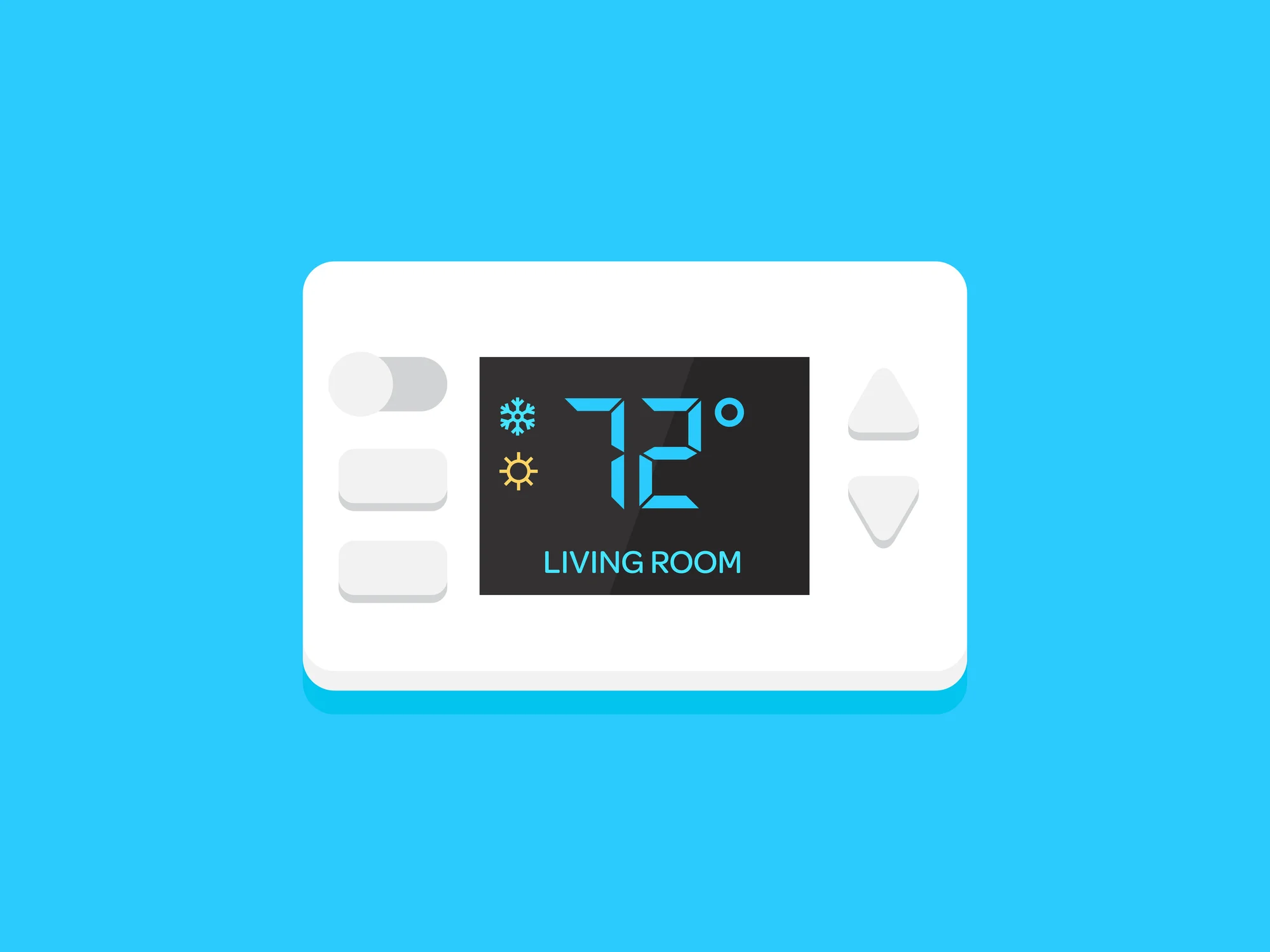
Smart thermostats are one of the most accessible entry points into demand flexibility programs like demand response or virtual power plants (VPPs) for utilities of any size. They’re already installed in millions of homes and can shift meaningful load during peak demand grid events.
Transforming a fleet of connected thermostats into a reliable, dispatchable resource presents a challenge far beyond simply engaging customers to enroll and participate. This includes considerations like evaluating device compatibility, customer comfort, and measurement and verification, all before launching a program, with references to the primary research shaping these decisions.
In This Article
- Why smart thermostats are a natural fit for demand flexibility
- What the research actually shows about savings
- Five things to evaluate before launching a program
- Common pitfalls utilities run into
- FAQ
- Terms glossary
- Conclusion
Why Smart Thermostats are a Natural Fit for Demand Flexibility
Residential air conditioning and heating make up a disproportionate share of peak demand, particularly during the hottest summer afternoons and coldest winter mornings. Because HVAC systems are large, cyclical loads that customers rarely notice being trimmed for a couple of hours, they’re a natural candidate for automated load shifting. Research from the Department of Energy (DOE) found that residential air conditioning often drives the summer peak, and building thermal mass frequently lets homes coast through a demand response event with minimal comfort impact, especially with pre-cooling.
The good news? The hardware is already there. Smart thermostat adoption has roughly doubled over the past eight years, and growing familiarity with app-based controls lowers the barrier for utilities to layer a demand flexibility program on top of devices customers already own. The stakes are significant: Google has noted that global electricity demand is forecast to grow by as much as three-quarters by 2050, and that the U.S. will need to add generation capacity equal to more than 200 GW of peak demand by 2030 — capacity that residential demand flexibility programs are designed in part to help offset.
What the Research Actually Shows About Savings
Utilities should ground program expectations in evaluation data rather than vendor marketing claims. There’s a growing body of independently reviewed evidence to draw from.
Device-level savings. DOE guidance holds that an optimized thermostat schedule — typically an eight-hour setback while a household sleeps or is away — can lower annual heating and cooling costs by roughly 10%. That figure reflects everyday scheduling behavior, not demand response events specifically, but it’s a useful baseline for customer-facing program marketing.
Event-level load reduction. A 2021 program evaluation of Consumers Energy’s smart thermostat demand response program, conducted by Cadmus, found that enrolled Google Nest customers saved an average of 0.9 kW per event, inclusive of automated pre- and post-event cooling. That kind of third-party evaluation is exactly the documentation utilities should request from technology partners and commission for themselves post-launch, since impacts vary by climate zone, housing stock, and program design.
Scale of enrollment. Google has reported that roughly 110 utilities across the U.S. and Canada have partnered on its Nest Rush Hour Rewards program, with more than one million actively enrolled customers across summer and winter seasons. During California’s Stage 3 system emergencies in August 2020, partners called seven demand response events over two days using enrolled Nest devices, according to comments Google Nest filed with the California Public Utilities Commission.
Willingness to participate. Owning a compatible device doesn’t guarantee enrollment. A peer-reviewed contingent valuation study published through the National Science Foundation’s PAR system found only about half of surveyed ratepayers were willing to join a direct load control program, at a median incentive compensation near $9.50 per month during summer enrollment. Willingness tracked customers’ environmental and institutional attitudes more than demographics — a useful signal for outreach design.
Awareness is the biggest barrier. A joint report from Parks Associates and Resideo Grid Services found that even as smart thermostat adoption climbed to roughly 16% of U.S. households with internet access, only about 20% of those households participate in a demand response program at all. Over half of non-participants said they hadn’t heard of their utility’s program or didn’t believe one existed — a communications gap as much as a technology one.
Five Things to Evaluate Before Launching a Program
- Device and protocol compatibility. Smart thermostat fleets are fragmented across manufacturers, protocols, and firmware versions. Utilities need clarity on which devices in their territory can receive dispatch signals, and through which pathway — vendor cloud APIs, OpenADR, or bring-your-own-thermostat — before finalizing program design.
- Comfort guardrails, not just setpoints. The most durable programs let customers define acceptable temperature bounds rather than accepting a blanket adjustment. Respecting comfort limits and using pre-conditioning to soften the start of an event both correlate with better retention.
- Measurement and verification methodology. Before launch, utilities should agree (ideally with an independent evaluator) on how load impact will be measured, whether via a matched-control-group baseline or a day-matching approach. Lock this in before the first event, not after.
- Enrollment friction. Every extra step between hearing about a program and enrolling costs conversions. Given how much awareness is already a barrier, simplifying enrollment by embedding sign up opportunities in existing account portals or manufacturer apps tends to outperform standalone campaigns.
- Equity and access. Smart thermostat ownership correlates with income and homeownership status, so bring-your-own-device models can exclude renters and lower-income households. Reaching out to LMI communities by pairing programs with subsidized device giveaways or landlord outreach helps close that gap.
Common Pitfalls Utilities Run Into
- Treating pilot results as universal. Load impact figures from one climate zone or housing stock don’t transfer cleanly to another.
- Underinvesting in communication. Since most non-participants simply don’t know a program exists, marketing deserves the same scrutiny as technology procurement.
- Skipping independent evaluation. Vendor-reported and independently verified savings can diverge. Budgeting for third-party evaluation from day one avoids disputes later, especially in cost-recovery filings.
- Ignoring the aggregation layer. A single thermostat is one point of flexible load. The operational value comes from aggregating thousands into a resource that can be dispatched predictably and measured consistently.
FAQ
What is demand flexibility, exactly? Demand flexibility describes any program that shifts load or conserves usage during peak events through aggregate device control designed to shift, reduce, or reshape electricity consumption in response to grid conditions, prices, or utility signals, without permanently reducing energy use. Smart thermostats are one of several distributed energy resources that provide it. These otherwise disparate DER assets are often managed by distributed energy resource management systems (DERMS).
How much load can a single smart thermostat actually shed? Independent evaluations put average per-event savings around 0.9 kW per device, though results vary by climate, home size, and setpoint adjustment.
Do customers need to give up comfort to participate? Not necessarily. Pre-conditioning and customer-defined temperature bounds are designed to minimize discomfort, and most events last only a few hours. Likewise, demand flexibility programs rely on customer participation, meaning that they lose no control over their personal devices.
Why is enrollment so much lower than device adoption? Mainly awareness. Research shows most non-participating owners either haven’t heard of their utility’s program or don’t believe one exists.
Do these programs work in winter as well as summer? Yes. Programs like Nest’s Rush Hour Rewards run seasonally in both summer and winter, since heating load also drives peaks in many territories.
What role does regulatory approval play? Most programs require utility commission approval, particularly when incentives are recovered through rates. A clear measurement and verification methodology filed alongside the program helps avoid disputes during cost-recovery proceedings.
Terms Glossary
- Demand flexibility — the capacity of a customer, device, or fleet of devices to shift or reduce electricity use in response to grid needs, prices, or signals.
- Demand response (DR) — a specific mechanism for achieving demand flexibility, typically involving a utility or aggregator temporarily adjusting enrolled devices during defined peak events in exchange for an incentive.
- Virtual power plant (VPP) — an aggregation of distributed energy resources, such as smart thermostats, batteries, and EV chargers, that is coordinated and dispatched as if it were a single power plant.
- Distributed energy resource (DER) — any small-scale energy resource located on the customer side of the meter, including smart thermostats, rooftop solar, batteries, and EV chargers.
- Grid-edge — the portion of the electric grid closest to the end customer, where DERMS platforms manage and monitor distributed devices like thermostats and chargers.
- Measurement and verification (M&V) — the methodology used to quantify the actual load reduction delivered by a demand response event, typically compared against an estimated baseline of what usage would have been without the event.
- Setpoint — the target temperature a thermostat is programmed to maintain; demand response events typically involve a temporary, bounded adjustment to this setpoint.
- Pre-conditioning — cooling or heating a home slightly before a demand response event begins, so the temperature swing during the event feels smaller to the occupant.
Smart Thermostats & Demand Flexibility Conclusion
Smart thermostats give utilities a rare combination: a device already in millions of homes, a load profile that lines up with system peaks, and a growing base of independently evaluated performance data to plan against. Programs that succeed tend to treat the thermostat as one piece of a larger demand flexibility strategy — pairing enrollment with comfort guardrails, rigorous measurement and verification, and enough communication to close the gap between device ownership and program participation. Remember: your customers want to enroll and participate, so strategize your marketing efforts, and make sure to consistently educate customers on their opportunities, because ultimately, demand flexibility programs thrive through scalability.
Do you have the right demand response solution?