Platform
 Grid-Edge DERMS
 Customer Engagement
 Demand Forecasting
 BYOD
BYOD Customer Engagement
 Demand Response
 EV Charging
 Incentive Processing
 Program Design
 Program Management Automation
 Localized Dispatch
 Virtual Power Plants
 API Integrations
 C&I
C&I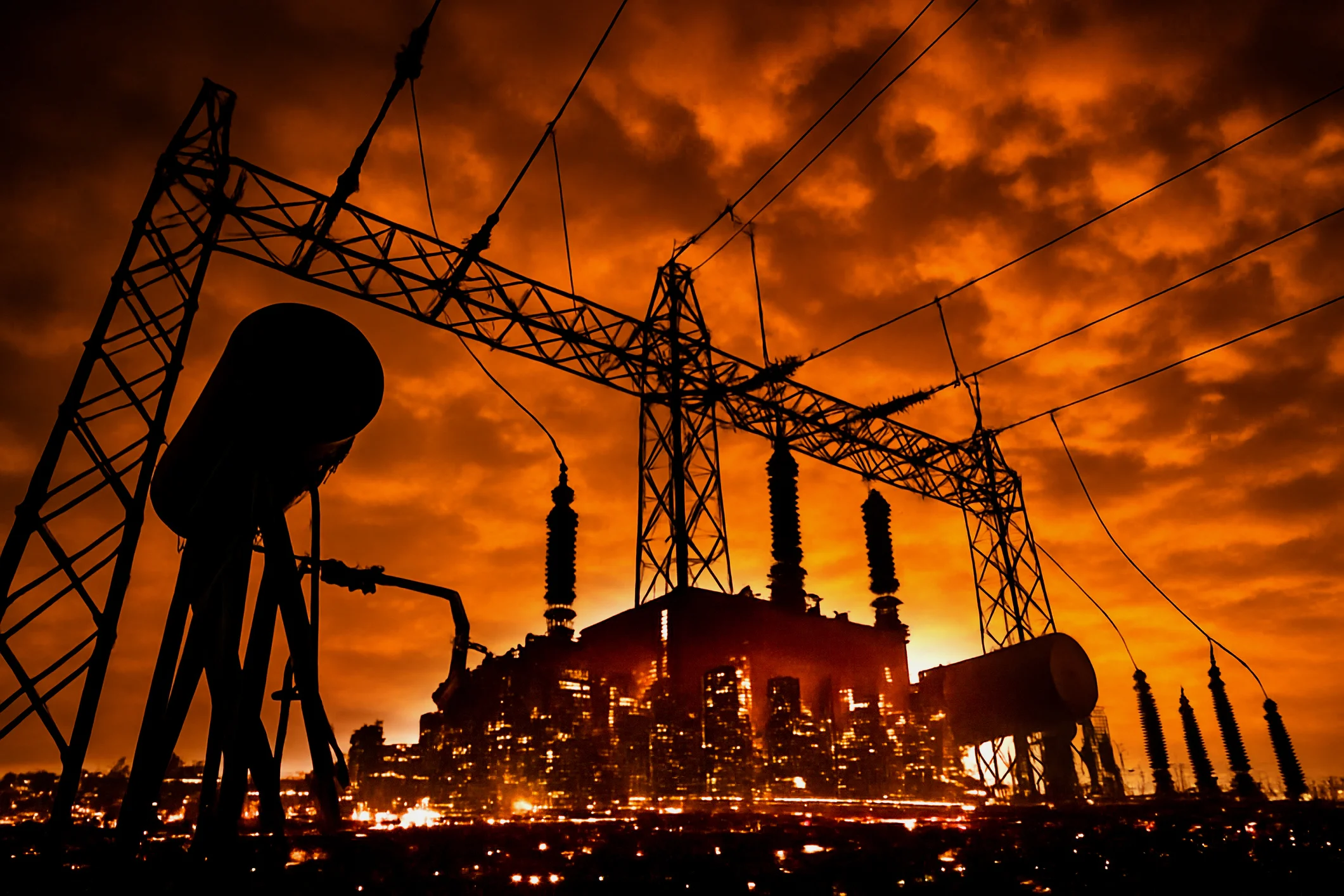
Firm load shedding is the deliberate, controlled disconnection of “firm” customer load, which is the electricity service utilities are contractually obligated to deliver under normal conditions, and used to protect the broader grid from a cascading failure. It’s the electric system’s last line of defense, used only after voluntary conservation and market-based demand response have been tapped out, reserved for genuine emergencies like extreme weather or generation shortfalls that threaten to take down the system if nothing is done.
Fortunately, leveraging distributed energy resource management systems (DERMS) to aggregate behind-the-meter distributed energy resources (DERs) like solar, battery energy storage systems (BESS), electric vehicles, EVSE chargers, and smart home devices like thermostats and water heaters, provides opportunities for utilities to deploy demand flexibility programs like virtual power plants (VPPs), demand response, or EV managed charging to minimize the need for firm shedding events, while decreasing the potential of outages.
In This Article
- What Does “Firm Load” Mean?
- What Is Firm Load Shedding?
- How Is Firm Load Shedding Carried Out?
- Firm Load Shedding vs. Other Grid Balancing Tools
- How Demand Flexibility and DERs Help Avoid Firm Load Shedding
- The Role of DERMS in Reducing Reliance on Load Shedding
- FAQ: Firm Load Shedding
- Glossary of Terms
- Conclusion
What Does “Firm Load” Mean?
Load is the amount of electricity being consumed at any given moment. “Firm” describes the priority level attached to that load: it’s the demand a utility has committed to serve continuously, under essentially all operating conditions, as opposed to “interruptible” or “curtailable” load that a customer has agreed, usually via contract or tariff, to reduce on request.
The distinction matters because it determines who gets cut off first when supply and demand fall out of balance. The U.S. Energy Information Administration (EIA) defines loss of service to firm loads as any outage lasting more than 15 minutes that affects more than 200 megawatts (MW) or 50% of the load a utility was serving immediately before the event, whichever is smaller, a threshold significant enough to trigger mandatory reporting to the U.S. Department of Energy (DOE).
What Is Firm Load Shedding?
Firm load shedding, also called load shedding, is a utility’s intentional reduction of firm customer load to preserve the stability of its bulk power supply system. The EIA’s regulatory glossary (linked above) describes load shedding as an intentional action cutting more than 100 MW of firm customer load specifically to maintain continuity of service, explicitly excluding the routine, automated use of load control equipment, a separate, lower-stakes tool.
In plain terms: grid operators implement firm load shedding strategies out of necessity to balance limited supply and demand or address infrastructure inadequacies to proactively avoid a service outage and without the need for costly peak energy market purchases. Firm load shedding is planned and ordered by grid operators, designed specifically to protect system-wide reliability.
How Is Firm Load Shedding Carried Out?
Firm load shedding generally falls into two categories, both governed by mandatory reliability standards from the North American Electric Reliability Corporation (NERC), enforced under authority delegated by the Federal Energy Regulatory Commission (FERC).
Manual, rotating outages. When a system operator determines demand will outstrip supply, utilities implement rotating outages, sometimes called rolling blackouts or feeder rotation. Customers are organized into blocks tied to distribution circuits, and each block loses power for a set window, typically 60 to 90 minutes, before service rotates to the next block.
The California Public Utilities Commission has documented this practice since the 1970s energy shortages, and its guiding principles still hold: distribute the burden equitably, and maximize voluntary load reduction before resorting to mandatory outages. Utilities typically exempt circuits serving hospitals and public safety facilities, though because customers often share circuits with essential users, a large share of a territory may be exempt from rotation entirely.
Automatic, frequency- and voltage-based shedding. Rotating outages are planned hours or days ahead. But some grid emergencies unfold in seconds. Under-frequency load shedding (UFLS) and under-voltage load shedding (UVLS) are automated protection schemes, built into relays across the bulk electric system, that disconnect predetermined blocks of load the instant frequency or voltage drops below a safe threshold. NERC’s reliability standards describe UFLS as the last line of defense against a cascading collapse, arresting a decline in system frequency before it triggers a wider blackout. These systems don’t wait for a human decision, since a full-blown frequency collapse can spread across an interconnection in seconds.
Firm Load Shedding vs. Other Grid Balancing Tools
Fortunately, firm load shedding isn’t the only response available to grid operators to balance the grid. The terms below are often used loosely, so it’s worth distinguishing them:
- Interruptible or curtailable load is demand customers have voluntarily agreed to reduce, often as a result of energy efficiency or behavioral demand response efforts. This isn’t firm load shedding, since these customers already accepted curtailment risk.
- Demand flexibility programs like VPPs, demand response, or EV managed charging incentivize customers to voluntarily shift or reduce usage during peak periods. These routine, opt-in versions of demand flexibility programs exist specifically to prevent firm load shedding from becoming necessary.
- Economic curtailment, including time-of-use (TOU) rates, happens when wholesale prices spike and large customers reduce load because it’s financially advantageous, not because a grid operator ordered it.
Firm load shedding is reserved for the scenario where all of the above have already been exhausted, or the event is moving too fast for anything but an automated relay to respond.
How Demand Flexibility and DERs Help Avoid Firm Load Shedding
Firm load shedding is, by design, a blunt instrument: it disconnects whole blocks of customers because that’s the fastest way to reduce load quickly. The aim of modern demand flexibility programs, virtual power plants (VPPs), and distributed energy resources is to give grid operators a much more precise, less disruptive set of tools to reach for first.
DERs, as defined by FERC in Order No. 2222, are small-scale generation and storage resources, typically 1 kW to 10,000 kW, located on the distribution system or behind a customer’s meter. FERC’s rule requires regional grid operators to let these resources aggregate and participate in wholesale energy, capacity, and ancillary services markets alongside traditional power plants, so a coordinated pool of small, flexible devices can now provide grid support that used to require a dedicated peaker plant.
That shift expands the set of tools available before a utility ever needs to shed firm load: behind-the-meter batteries and EV chargers can be dispatched to reduce net demand on a circuit during a peak event, offsetting exactly the kind of shortfall that would otherwise trigger a rotating outage; smart thermostats and water heaters can be adjusted by a few degrees across thousands of homes simultaneously, shaving peak demand without anyone losing power; and VPPs, which aggregate these devices into a single, dispatchable resource, let utilities call on demand flexibility with the predictability of a conventional generator.
The Role of DERMS in Reducing Reliance on Load Shedding
Coordinating thousands, or millions, of individual DERs in real time isn’t a job utilities can do with spreadsheets and phone calls. That’s where a Grid-Edge distributed energy resource management system (DERMS) comes in: platform-level software that gives grid operators visibility into and control over distributed devices at scale, so they can be dispatched precisely where and when they’re needed.
A well-designed Grid-Edge DERMS platform lets a utility target demand flexibility down to the individual circuit or substation, rather than shedding load indiscriminately across an entire feeder. That granularity is the key difference between a rotating outage, which cuts power to everyone on a circuit regardless of need, and a demand flexibility event, which reduces just enough load, from just the right devices, to keep the system stable without anyone experiencing an outage. As loads like EV charging and electrification continue to grow, NERC has flagged the need for expanded coordination between grid planning, operations, and these emerging distributed resources, a role DERMS platforms are increasingly built to fill.
FAQs
Is firm load shedding the same as a blackout? Not exactly. A blackout is typically an unplanned failure. Firm load shedding is a deliberate, controlled action taken by a utility or grid operator to prevent an uncontrolled, cascading blackout from occurring in the first place.
Who decides when firm load shedding happens? Independent system operators (ISOs), regional transmission organizations (RTOs), or utility system operators make the call for manual rotating outages, based on real-time assessments of supply and demand. Automated shedding, like UFLS and UVLS, is pre-programmed into relays and triggers instantly once frequency or voltage crosses a defined threshold, without waiting for a human decision.
Can demand flexibility eliminate the need for firm load shedding? Not entirely, since firm load shedding exists as a safeguard for extreme, unpredictable events. But robust demand response, DER, and VPP programs significantly reduce how often and how severely utilities need to rely on it by addressing shortfalls earlier and more precisely. Software like Topline Demand Control (TDC) is designed to take demand flexibility programs one step further, leveraging AI, machine learning, DERMS, and model predictive control to optimize DERs at the device level, guaranteeing the reliable outcome that grid operators need.
Are hospitals and emergency services exempt from firm load shedding? Utilities generally design rotating outage plans to exempt circuits serving hospitals and public safety services. Because circuits often serve a mix of customers, some non-essential customers may be exempted simply because they share infrastructure with an essential user.
Glossary of Terms
- Firm load — Demand a utility is obligated to serve continuously, under normal conditions.
- Firm load shedding — The intentional reduction of firm customer load to protect bulk power system stability.
- Rotating outage (rolling blackout) — A planned, temporary interruption rotated across blocks of customers to distribute the burden of an outage.
- UFLS / UVLS — Automated schemes that disconnect predetermined load when grid frequency or voltage drops below a safe threshold.
- Demand response — Programs that incentivize customers to voluntarily shift or reduce usage during peak demand.
- Distributed energy resource (DER) — A small-scale generation, storage, or flexible-load resource on the distribution grid or behind a customer’s meter.
- Virtual power plant (VPP) — An aggregation of DERs coordinated to act as a single, dispatchable resource.
- Distributed energy resource management system (DERMS) — Software giving utilities visibility into, and control over, distributed energy resources at scale.
Conclusion: What is Firm Load Shedding?
Firm load shedding is, and should remain, a measure of last resort: the tool grid operators reach for only after every other option has been exhausted. As the grid absorbs more electrification, from EV charging to electrified heating, pressure on that balance will only grow. Demand flexibility, DERs, and the DERMS platforms that coordinate them give utilities a far more precise way to manage peak demand, protecting reliability without resorting to the blunt step of cutting power to customers promised firm service.
Is Your Grid-Edge DERMS Built for What’s Next?