Platform
 Grid-Edge DERMS
 Customer Engagement
 Demand Forecasting
 BYOD
 Customer Engagement
 Demand Response
 EV Charging
 Incentive Processing
 Program Design
 Program Management Automation
 Localized Dispatch
 Virtual Power Plants
 API Integrations
 C&I
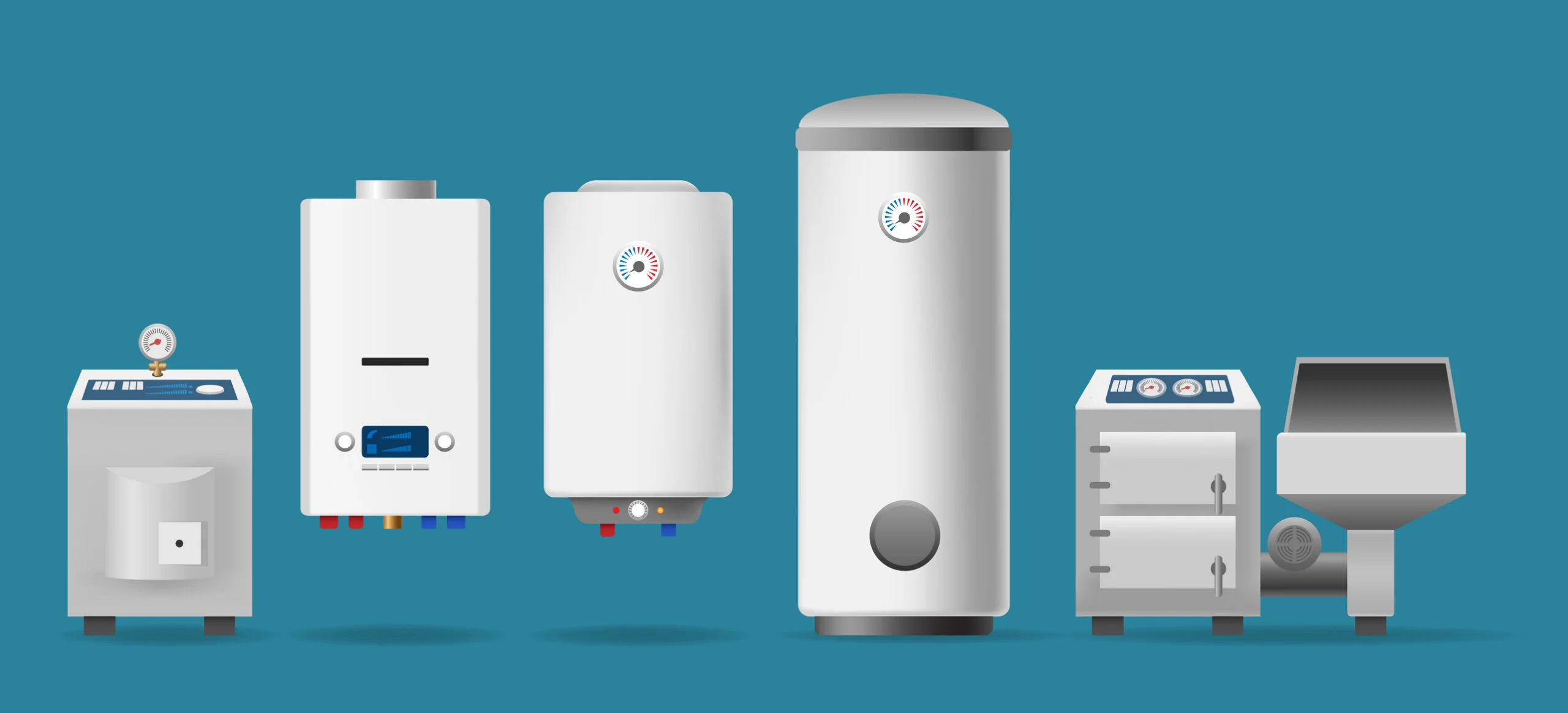
Smart water heaters represent an underused opportunity for use in demand flexibility programs. Since water heater tanks store heat for hours, utilities can shift its load away from peak periods without customers noticing. Because nearly every home has one, small per-device flexibility adds up to meaningful capacity at scale.
That’s why water heaters deserve more than a line item in a utility’s distributed energy resource (DER) portfolio. Enrolled alongside smart thermostats, EV chargers, and home batteries, they act as a portfolio multiplier: they add capacity, smooth out the gaps other devices leave, and lower the cost of every flexible megawatt a utility manages, all with minimal customer disruption.
In This Article
- Why Demand Flexibility Matters More Than Ever
- The Water Heater Market Is a Ready-Made Opportunity
- How Water Heater Demand Flexibility Programs Work
- Why Water Heaters Multiply Portfolio Value
- Program Types That Put Water Heaters To Work
- How To Market Water Heater Programs to Customers
- The Bottom Line
- FAQs
- Glossary of Terms
Why Demand Flexibility Matters More Than Ever
U.S. electricity demand is growing faster than it has in decades, and costly grid infrastructure upgrades can’t keep pace. The U.S. Energy Information Administration (EIA) projects consumption will climb from a record 4,195 billion kWh in 2025 to 4,399 billion kWh in 2027, the strongest four-year growth stretch since 2000. Several pressures are stacking up at once:
- AI data centers. Large computing facilities are the single biggest driver of new load, and EIA expects commercial demand to outpace residential demand in 2026 for the first time on record. Utilities are increasingly using demand flexibility to manage data center growth.
- Electrification. Nearly 6 million EVs were on U.S. roads in 2024, about six times more than in 2018, and heat pumps outsold gas furnaces again in 2025.
- Supply chain and tariffs. Power transformer lead times averaged about 128 weeks in 2025, and new tariffs, including a 50% tariff on copper, are pushing equipment costs higher.
- Extreme weather. Heat waves and winter storms create short, severe peaks that are the most expensive hours to serve; climate change is expanding the months where critical peaks are the most likely, leading to grid events pushed to traditionally off-peak periods of consumption.
When new substations, transformers, and generation take years to arrive, the fastest and most affordable capacity a utility can add is the flexible load already sitting in its customers’ homes. That’s why the choice between building new infrastructure and orchestrating behind-the-meter DERs is now a core planning question.
The Water Heater Market Is a Ready-Made Opportunity
Water heaters are one of the largest untapped demand flexibility resources in the country, and the installed base is growing more grid-ready every year. According to the American Council for an Energy-Efficient Economy (ACEEE), almost 60 million U.S. homes have electric water heaters, and 4 to 5 million units are sold each year.
Several trends are expanding that opportunity:
- Electric units dominate new sales. Electric models held a 54% share of U.S. water heater shipments across 2024 and 2025, per RMI’s market tracker.
- Connectivity is becoming standard. Washington, Oregon, and Colorado require new electric water heaters to include a CTA-2045 or AHRI 1430 communications port.
- A federal rule is about to scale grid-ready hardware. Beginning May 6, 2029, new electric storage water heaters over 35 gallons will effectively need heat pump technology. DOE expects heat pump models to rise from roughly 3% to more than 50% of new electric storage units, and nearly all of them ship with a CTA-2045 port.
- Replacement cycles do the rest. Tank water heaters last about 10 to 15 years, so a steady share of the stock turns over, and becomes connectable, every year.
The long-term potential is huge. ACEEE estimates that if demand flexibility became standard in new water heaters starting in 2030, the fleet could supply 13.5 GW of summer flexibility and 23 GW of winter flexibility by 2050, more capacity than 40 large power plants.
How Water Heater Demand Flexibility Programs Work
Water heater programs work because the tank is a thermal battery: it stores energy as hot water, so the utility can change when the heating happens without changing when the customer uses hot water. A typical event runs in three steps:
- Load up. Before a forecasted peak, the utility or aggregator signals enrolled water heaters to heat, sometimes a few degrees above their normal set point. This advanced load-up builds a thermal reserve, and a mixing valve keeps tap temperatures safe.
- Shed. During the peak, heating elements or compressors pause or cycle less often. The insulated tank keeps delivering hot water.
- Recover. After the event, units return to normal operation, with recovery staggered across the fleet so it does not create a new spike.
The signals travel through a Grid-Edge distributed energy resource management system (DERMS) to each device, either through a CTA-2045 port and plug-in communications module or through a manufacturer’s cloud connection over Wi-Fi. Customers can override an event at any time.
The shift per device is modest. ACEEE notes that a 50-gallon electric resistance water heater draws about 4,500 watts while heating, with an average event shift closer to 500 watts; heat pump models shift less than half of that because they are already efficient. The value comes from aggregation, which is where water heaters start to change the math of an entire portfolio.
Why Water Heaters Multiply Portfolio Value
Water heaters multiply the value of a demand flexibility portfolio because they’re flexible in the hours, seasons, and situations where other devices are weakest, and customers barely notice them. That makes every other enrolled resource more dependable.
- They are nearly invisible to customers. In Southern Maryland Electric Cooperative’s FlexHome pilot, water heater opt-out rates stayed below 3%, and some months reached zero, compared with a 7% average for the co-op’s thermostat program. Low opt-outs mean more predictable capacity per event.
- They cover winter and year-round needs. Water heating runs every day, and ACEEE estimates winter flexibility potential is nearly double summer potential. As heating electrifies and peaks shift to winter mornings, water heaters fill a gap thermostats and solar-paired batteries cannot always cover.
- They tolerate frequent dispatch. Because events are unnoticeable, water heaters can shift load daily, not just on a handful of peak days, which reduces fatigue on thermostat participants.
- They soak up surplus renewables. Load-up commands can align heating with midday solar or overnight wind, a strategy IEEFA describes as treating hot water like a thermal battery.
- They support local grid relief. Dense clusters of water heaters on a single feeder can be dispatched to relieve distribution constraints at specific transformers.
- They diversify risk. A diversified portfolio is less exposed to any single device class, manufacturer, or weather pattern.
Scale is what turns these advantages into planning-grade capacity. With each unit worth roughly 0.1 to 0.5 kW, programs need low-cost enrollment, automated dispatch, and repeatable growth from pilot to tens of thousands of devices. Utilities that build that machinery now will be ready when the 2029 rule starts delivering grid-ready units into homes by the millions.
Program Types That Put Water Heaters To Work
Water heaters fit into nearly every demand flexibility program structure a utility already runs. The most common include:
- Demand response. Event-based programs pause heating during system peaks in exchange for an incentive. Rural cooperatives have long led here, and Duke Energy includes water heaters in its EnergyWise program.
- Virtual power plants (VPPs). Water heaters are aggregated with thermostats, batteries, and EV chargers into a single dispatchable resource that can deliver a target load shape.
- Bring your own device (BYOD). Customers enroll a connected water heater they already own from an approved model list, so the utility avoids installation costs. These programs depend on smooth enrollment.
- Incentive-linked enrollment. Rebates for new heat pump water heaters are tied to program enrollment, as SMUD does with heat pump water heater incentives conditioned on demand response participation.
- Daily load shifting. Water heaters follow time-of-use schedules or renewable output every day, not just during events.
- Locational programs. Utilities target water heaters on constrained feeders to defer transformer or substation upgrades.
How To Market Water Heater Programs to Customers
The best water heater marketing reaches customers at the moment they’re already making a water heater decision and answers their one real worry: will I run out of hot water? Practical approaches include:
- Meet customers at the point of sale or install. Water heaters are usually bought during an emergency replacement, so plumbers, retailers, and HVAC contractors are the most important channel. Train them to recognize qualifying models and hand off enrollment materials.
- Lead with comfort. State plainly that hot water stays available, events are brief, and customers can opt out at any time.
- Keep incentives simple and recurring. Fixed participation payments tend to suit water heaters better than pay-per-kWh models. Compare types of demand flexibility incentives.
- Cross-enroll existing participants. Thermostat and EV charging participants already trust the utility and are strong candidates for a second device.
- Use channels you already own. Bill inserts, customer service scripts, and repeat email touchpoints often outperform one-time campaigns. See why marketing demand flexibility doesn’t have to be hard.
- Report back. Sharing how many events ran and what they accomplished reduces attrition year over year.
The Bottom Line
Rising load, constrained supply chains, and electrification are making demand flexibility essential, and water heaters are among the cheapest, least intrusive ways to deliver it. Enrolled alongside thermostats, EV chargers, and batteries, they add year-round capacity, reduce opt-outs, and make the whole portfolio more dependable. With grid-ready hardware arriving at scale, now is the time to build water heaters into the plan.
FAQs
What is demand flexibility? Demand flexibility is the ability to shift, shed, or reshape electricity use in response to grid conditions. It includes event-based demand response as well as daily load shifting and time-of-use optimization.
Why are water heaters good for demand flexibility? A water heater tank stores heat for hours, so utilities can heat water before a peak and pause during it without affecting hot water at the tap.
Will customers run out of hot water? Rarely. Programs use short events and load-up strategies, and customers can override. In one Maryland pilot, opt-out rates stayed below 3%.
How much capacity does one water heater provide? Roughly 0.1 to 0.5 kW per unit, depending on the model, season, and control strategy. The value comes from enrolling thousands of devices.
What does the 2029 DOE water heater rule change? From May 6, 2029, most new electric storage water heaters over 35 gallons will effectively need heat pump technology, and those units typically ship with a CTA-2045 port, making them grid-ready at installation.
Can water heaters join a virtual power plant? Yes. Water heaters can be aggregated with thermostats, batteries, and EV chargers and dispatched as a single resource through a DERMS.
Glossary of terms
- Demand flexibility: The ability to shift, shed, or reshape electricity use in response to grid needs.
- Demand response (DR): An event-based program in which customers or their devices reduce or shift electricity use during peaks, usually for an incentive.
- Virtual power plant (VPP): A network of distributed devices coordinated and dispatched as a single grid resource.
- Bring your own device (BYOD): A program that lets customers enroll a qualifying device they already own.
- Distributed energy resource (DER): A small-scale energy resource at or near the point of use, such as a water heater, battery, or EV charger.
- Distributed energy resource management system (DERMS): Software that monitors, groups, and dispatches DERs.
- CTA-2045: An open communications port standard that lets water heaters and other appliances receive utility signals regardless of manufacturer.
- AHRI 1430: An industry standard that builds on CTA-2045 to define how demand-flexible electric storage water heaters respond to signals.
- Advanced load-up: Heating water above its normal set point before an event to create a thermal reserve.
- Heat pump water heater (HPWH): A water heater that moves heat from surrounding air into the tank, using far less electricity than resistance heating.
- Peak demand: The highest level of electricity use in a given period, which sets how much capacity a utility must have available.
Get the Playbook for Running Best-in-Class Demand Flexibility Programs