Platform
 Grid-Edge DERMS
 Customer Engagement
 Demand Forecasting
 BYOD
BYOD Customer Engagement
 Demand Response
 EV Charging
 Incentive Processing
 Program Design
 Program Management Automation
 Localized Dispatch
 Virtual Power Plants
 API Integrations
 C&I
C&I
Electricity demand is climbing faster than it has in decades, driven by electrification, AI data centers, extreme weather, and a grid that was never designed for this level of strain. According to the International Energy Agency, global electricity demand grew at nearly twice the pace of total energy demand over the past decade, and could double by 2035, with the need for short-term flexibility growing between two and seven times depending on the region. Utilities can’t build their way out of that gap fast enough, or affordably enough, with new generation and infrastructure alone.
That’s where demand flexibility comes in, and increasingly, one of the more overlooked assets in the demand flexibility toolkit is already installed in tens of millions of homes: the water heater.
In This Article
- The Peak Demand Problem & BTM DERs
- The Market Case for Water Heaters
- How Water Heater Demand Flexibility Programs Work
- Why Scalability Matters
- FAQs
- Glossary of Terms
- Conclusion
The Peak Demand Problem & Why Behind-the-Meter Assets Matter
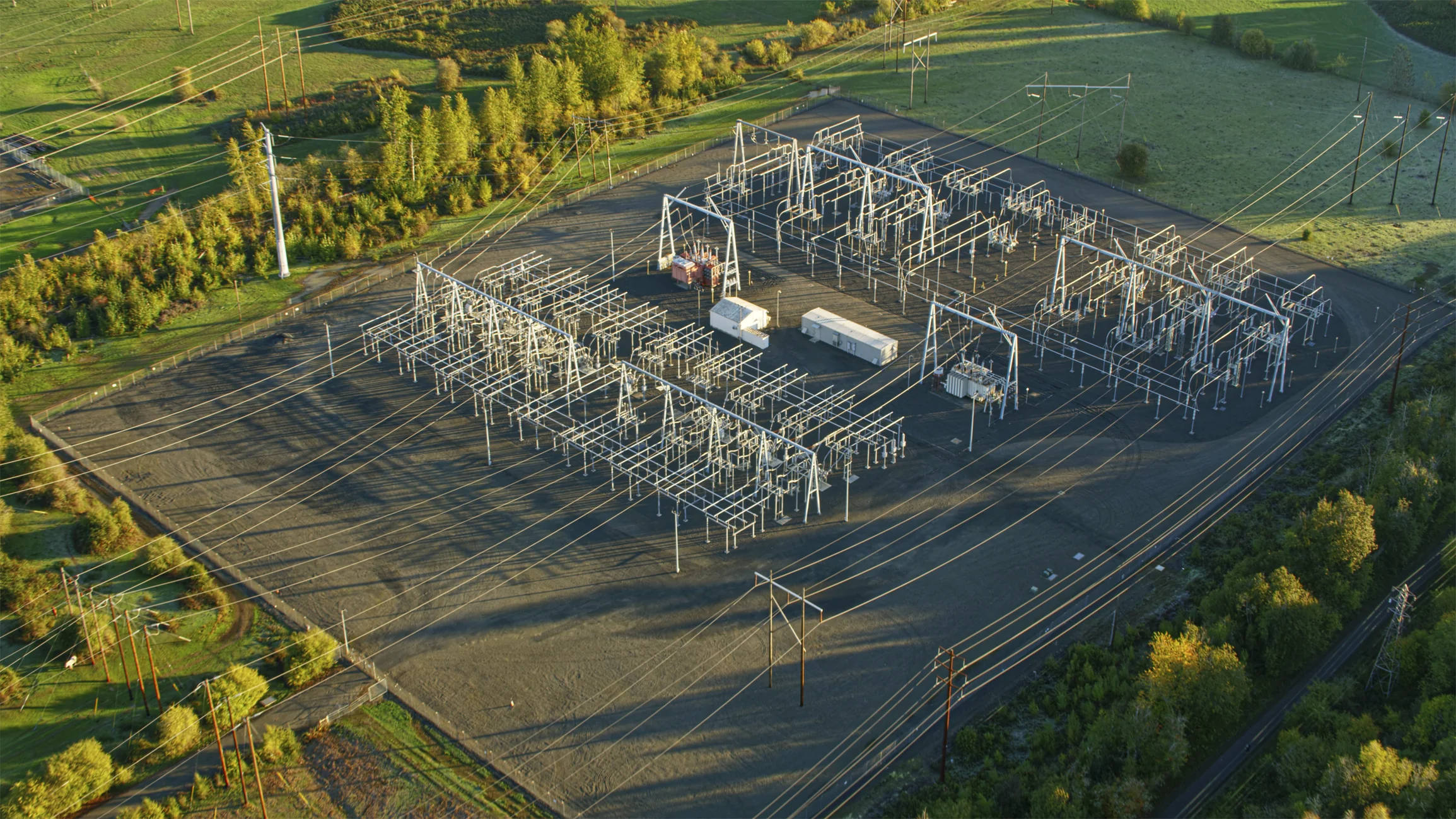
Utilities have to build and maintain enough generation capacity to cover the single highest moment of demand in a given year, plus a safety margin, even though that peak might only occur for a handful of hours. That’s an expensive proposition, and it’s why peaker plants sit mostly idle, why utilities buy costly spot-market power on hot afternoons, and why grid infrastructure investment keeps climbing.
Distributed energy resources (DERs), offer a different path. Rather than adding supply, DERs like batteries, EVs, smart thermostats, and water heaters let utilities adjust demand itself, shifting or shedding load at the exact moments the grid needs relief. Because these assets already sit behind the meter, on the customer’s side of the equation, tapping them doesn’t require new poles, wires, or substations. It requires visibility, coordination, and a customer willing to opt in.
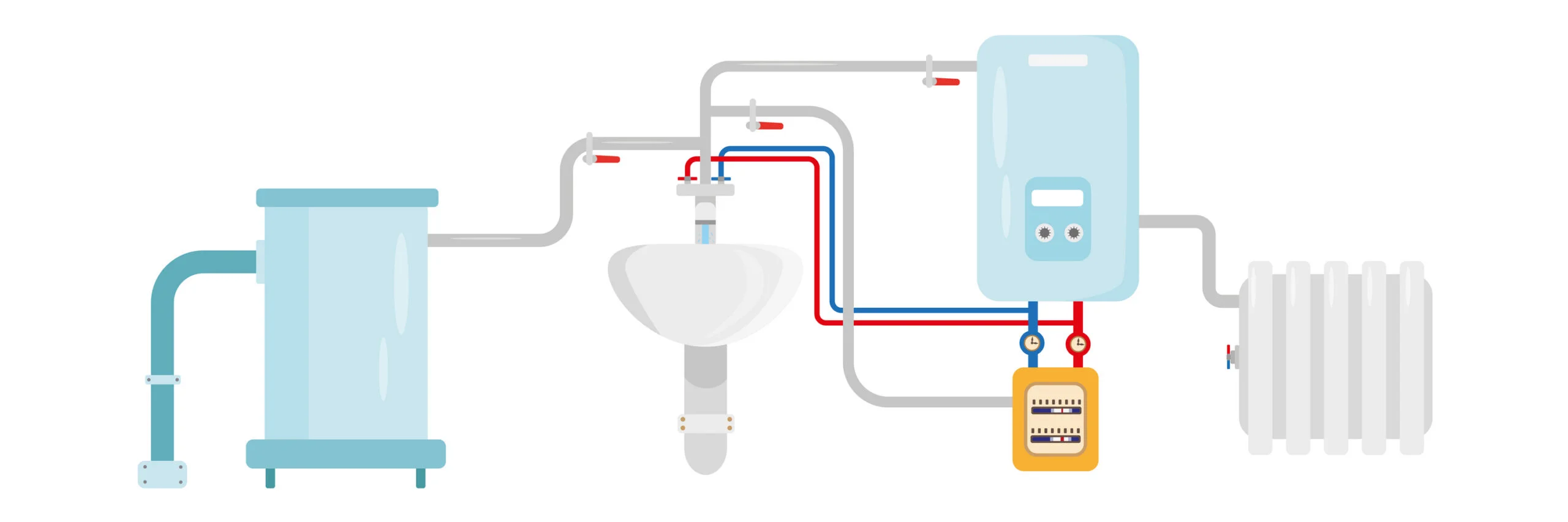
Water heaters are particularly well suited to this role because they function like thermal batteries. A standard 50-gallon electric tank can go for hours without new heating input and still deliver hot water on demand, which gives a utility or aggregator a wide window to decide when that heating actually happens.
The Market Case: Water Heaters are a Growing, Viable Resource
The scale of the opportunity is significant, and it’s growing. There are nearly 60 million homes in the U.S. with electric water heaters today, with annual sales in the 4-5 million range, according to the American Council for an Energy-Efficient Economy (ACEEE). ACEEE estimates that if demand flexibility capability became standard in new water heaters starting in 2030, water heaters could provide 13.5 gigawatts of summer demand flexibility and 23 gigawatts in winter by 2050, roughly the output of dozens of large power plants, as participation grows toward an estimated 50% of eligible households.
Federal and state policy is reinforcing that trajectory. Washington, Oregon, and Colorado already require new electric water heaters to ship with a communications port compliant with open standards like CTA-2045 or AHRI 1430, and a bipartisan federal proposal would extend similar requirements nationally. The IEA’s own modeling backs this up at a global level, finding that equipping just 10% of homes’ hot water systems with smart controls could unlock an additional 600 megawatts of peak demand reduction, the equivalent of a large power station, and that hot water heating is already one of the technologies utilities lean on for emergency peak shaving today.
Put simply: the hardware is proliferating, the standards are maturing, and the resource is real. In fact, electric storage water heaters, the category most relevant to demand flexibility, made up roughly 54% of U.S. water heater shipments across 2024 and 2025, meaning the majority of units sold today are already technically eligible for grid connectivity.
How Water Heater Demand Flexibility Programs Actually Work
Water heater programs generally take one of a few shapes, and understanding the differences matters when designing a program.
Demand response programs briefly pause or delay heating elements during peak periods, often paired with “load-up” command, where the water heater is signaled to heat past its normal set point shortly before an event so the tank carries extra thermal reserve once heating pauses. Done well, the customer never notices a change at the tap.
Virtual power plants (VPPs) take this further by aggregating water heaters alongside thermostats, batteries, and EV chargers into a single dispatchable resource that can be called on to shift load or provide grid services, much like a traditional power plant, but built from distributed, behind-the-meter capacity instead of centralized generation.
Bring-your-own-device (BYOD) programs let customers enroll a qualifying water heater they already own, rather than requiring the utility to install new hardware. According to research, BYOD programs originally centered on thermostats and have since expanded to batteries, EVs, and water heaters, which widens the eligible pool of participants without utilities carrying installation costs.
Across all three models, the common technical thread is an open communication standard, most often CTA-2045, that lets water heaters from different manufacturers speak the same language to a utility’s control systems. That interoperability is what makes water heater fleets programmable at scale rather than a patchwork of proprietary, single-vendor pilots. And because water heaters store energy as heat rather than delivering it instantly, the shift happens quietly: no lights flicker, no thermostat visibly changes, and hot water is there when the customer turns on the tap.
Why Scalability, Not Just Launch, Determines Long-Term Success
Launching a pilot program is the easy part. The real test of a water heater demand flexibility program is whether it can grow from a few hundred enrolled devices into a dependable, thousands-strong grid resource, one that a utility can actually plan around. A program that never scales past its pilot cohort delivers marginal grid value and struggles to justify continued investment.
Scaling a water heater program well means treating customer engagement, contractor relationships, and program software as connected parts of the same growth engine, not separate work streams.
Customer marketing and engagement. Enrollment tends to stall not because customers are opposed to participating, but because they don’t know the option exists, or they’re uncertain about what ceding control of their water heater actually means. Utility marketing works best when it meets customers where they are, addressing comfort concerns directly, explaining that participation is voluntary and reversible, and using existing channels, like billing inserts, customer service scripts, and point-of-purchase messaging, rather than building an entirely new campaign from scratch. Ongoing, repeat engagement outperforms one-off announcements, and reporting back to participants on the grid impact of their enrollment helps reduce attrition across multiple program years.
Contractor networks. Plumbers, electricians, and HVAC installers are often the only human touchpoint a customer has when a water heater is purchased or replaced, which makes them a distribution channel that marketing alone can’t replicate. Utilities that formally train and incentivize contractors to explain qualifying equipment and hand customers enrollment materials at the point of installation capture participation at the exact moment a customer is already making a water heater decision. Programs that skip this step often see rebates go underused simply because neither the installer nor the customer realized the equipment qualified.
Program automation and incentive processing. As enrollment grows from hundreds to tens of thousands of devices, manual enrollment verification and incentive processing become the bottleneck. Automating eligibility checks, event dispatch, and incentive disbursement is what allows lean program teams to manage a much larger, more complex fleet without a proportional increase in headcount. Incentive design itself also needs to scale thoughtfully: a fixed participation payment, for example, tends to work better for water heaters than a strict pay-per-kWh model, since customers who occasionally override an event for personal reasons still remain engaged rather than penalized out of the program.
FAQs
Will a water heater demand flexibility program leave customers without hot water? Generally, no. Programs are built around brief curtailment windows, often paired with preheating or “load-up” strategies, specifically so that a 40- to 50-gallon tank’s stored heat covers the gap. Most participants never notice a change at the tap, and customers can typically override an event if they need to.
What’s the difference between demand response and demand flexibility? Demand response is a specific, event-based strategy: customers or their devices reduce or shift usage during a defined grid event, usually in exchange for an incentive. Demand flexibility is the broader category, encompassing demand response as well as ongoing strategies like time-of-use scheduling and ongoing load optimization across a device fleet.
Can customers enroll a water heater they already own? Often, yes, through a bring-your-own-device (BYOD) structure, provided the unit is on the utility’s approved equipment list and has the necessary communication capability, typically a CTA-2045 port or Wi-Fi connectivity.
Do all electric water heaters qualify for these programs? Not automatically. Eligibility usually depends on whether the water heater has, or can be retrofitted with, a communications module and controls that let it receive signals from a utility or aggregator. Heat pump and newer electric resistance models increasingly ship with this capability built in.
Why does scalability matter more than the size of the initial pilot? A small pilot proves the concept, but it rarely delivers meaningful grid value on its own. Utilities only realize the full benefit of water heater flexibility, measured in avoided peaker plant costs, deferred infrastructure spend, and improved reliability, once enrollment grows into the thousands of devices and stays there season over season.
What role do contractors play in program growth? Plumbers, electricians, and HVAC installers are frequently the only point of human contact a customer has when a water heater is purchased or replaced. Utilities that train contractors to identify qualifying equipment and hand customers enrollment information at the point of installation tend to see stronger, more consistent enrollment than those relying on marketing alone.
Glossary of Key Terms
Demand flexibility: The broad capability to shift, shed, or reshape electricity consumption in response to grid conditions, encompassing demand response as well as ongoing strategies like preheating and time-of-use scheduling.
Demand response (DR): A demand flexibility mechanism in which customers or their devices reduce or shift electricity use during specific grid events, typically in exchange for a bill credit or direct payment.
Virtual power plant (VPP): An aggregated network of distributed energy resources, such as water heaters, batteries, thermostats, and EV chargers, coordinated and dispatched as a single, unified grid resource.
Bring your own device (BYOD): A program structure that lets customers enroll a pre-approved device they already own, rather than requiring utility-installed hardware.
Distributed energy resource (DER): Any small-scale energy resource located behind the meter, at or near the point of consumption, including water heaters, solar panels, battery storage, and EV chargers capable of responding to grid signals.
CTA-2045: An open, modular communication port standard that lets water heaters and other appliances receive control signals from a utility or aggregator using a common interface, regardless of manufacturer.
Load-up (advanced load-up): A strategy where a water heater is signaled to heat past its normal set point shortly before a demand event, building a thermal reserve so heating can pause without affecting hot water availability.
Peak demand: The highest level of electricity consumption recorded on the grid within a given period, which utilities must build and maintain enough capacity to cover.
Distributed energy resource management system (DERMS): Software used to monitor, coordinate, and dispatch distributed devices, like enrolled water heaters, as part of a demand flexibility or VPP program.
Incentive processing: The administrative and software function of verifying customer eligibility, calculating payments, and disbursing incentives to program participants, often automated to support programs at scale.
Enrollment incentive: A one-time payment or bill credit offered to customers upon joining a demand flexibility program, used to lower the perceived risk of participating.
Participation incentive: A fixed payment tied to a customer’s engagement in demand response events, regardless of exact energy savings, well suited to devices like water heaters where behavior can vary event to event.
Grid resiliency: A grid’s capacity to withstand, adapt to, and recover from disruptions, including extreme weather and demand spikes, while maintaining reliable service.
Conclusion: How To Develop (& Scale) Water Heater Demand Flexibility Programs
Rising peak demand isn’t a problem utilities can solve with generation investment alone, and water heaters represent a genuinely underused, thermally forgiving resource already sitting in tens of millions of homes. The technology and standards to make that resource programmable are increasingly mature.
What separates a water heater demand flexibility program that plateaus after its first cohort from one that becomes a durable grid asset is deliberate investment in the parts that scale: clear, repeated customer engagement, contractor relationships that meet customers at the moment of decision, and software that can process enrollment and incentives without buckling under growth. Get those three right, and a modest pilot can become a genuine part of how a utility manages its grid for years to come.
Get the Playbook for Running Best-in-Class Demand Flexibility Programs